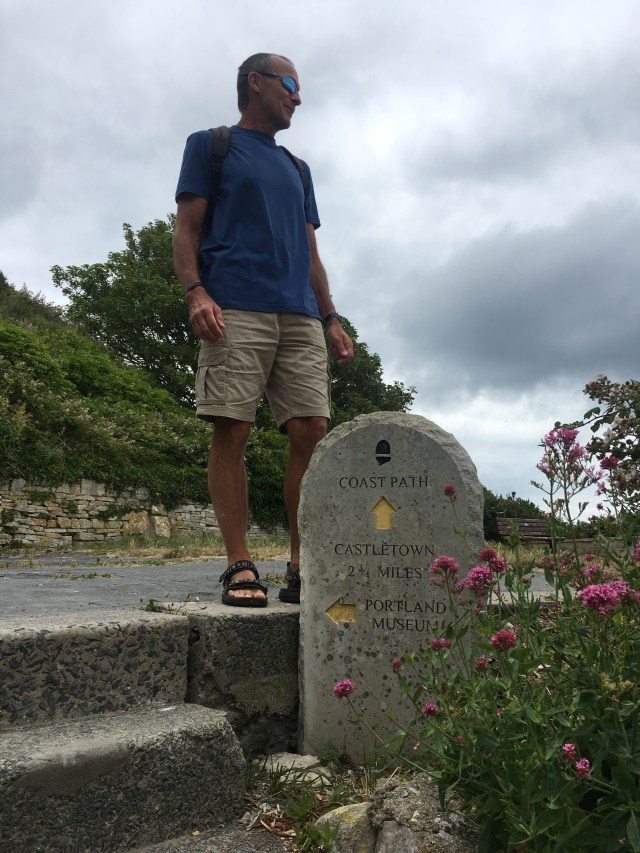
Driving in the English countryside. It’s exciting and challenging; it’s a sensory adventure; it’s almost an extreme sport; it’s potentially obsessive.
Some years ago when we were driving the tiny laneways of Southern Ireland, we were shocked that the 50 mph speed limit didn’t change to accommodate varying driving conditions. It was bonkers! It seemed to be issuing drivers with a challenge rather than protecting them from harm. In England the speed limits are more conservative – 30 mph through villages and towns, 40 mph on narrow B roads, with reducible limits on tight bends and blind dips and summits, 50 mph on dual carriageways (generally the A roads).
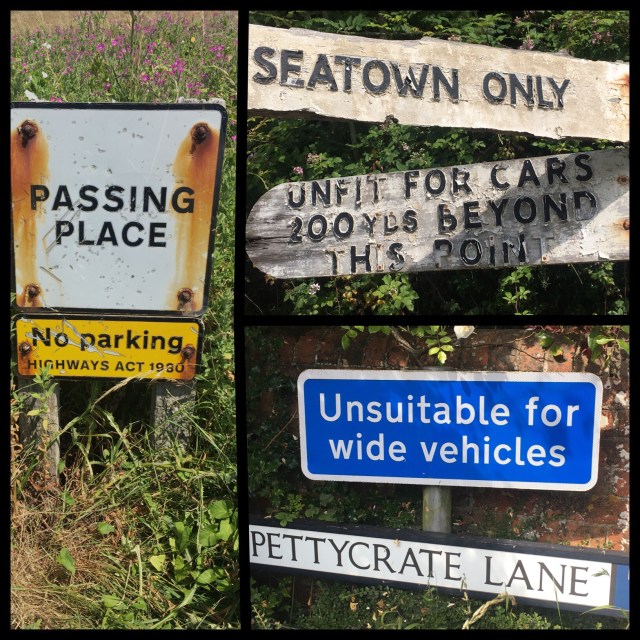
Nevertheless, we found some roads harrowing to drive. These are the single lane roads, little more than 7 feet wide, with undulating twists and turns and tall hedgerows on either side restricting visibility entirely to the road ahead. Some of these roads have occasional passing places and some don’t. Approaching blind corners and meeting oncoming vehicles can create adrenaline charged moments of tension. Reversing to the nearest passing place with a tractor closely following your progress from the front can be nerve-racking.
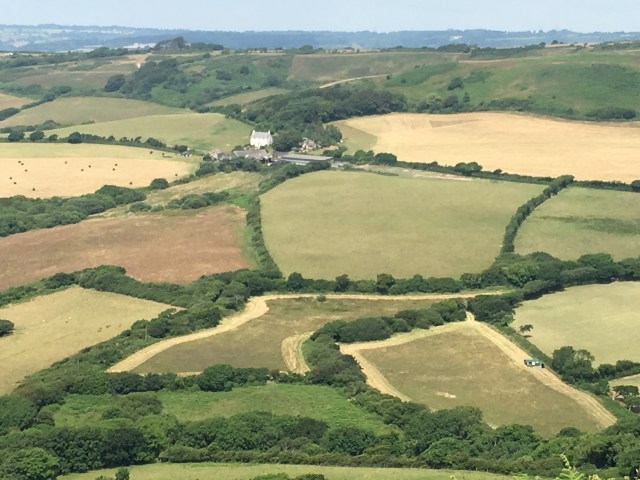
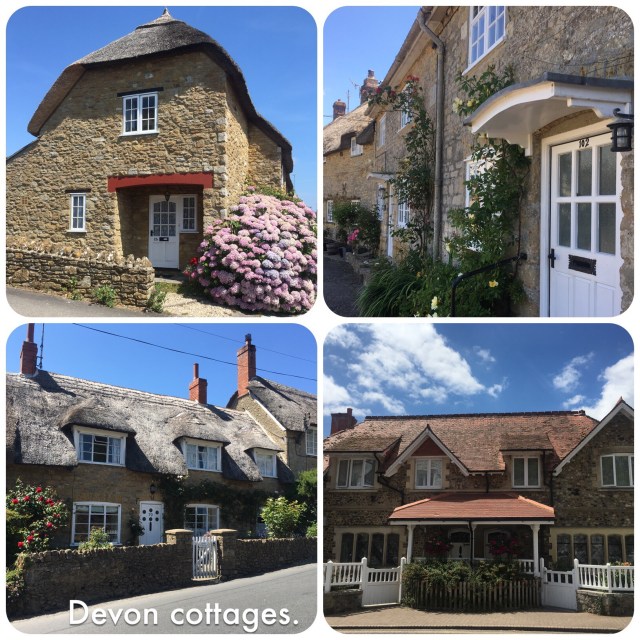
Making these little adventures all worth while are the world’s cutest villages that dot the countryside, with ancient stone houses, halls and churches, neat thatched rooftops, inviting inns and pubs along with green pastures, flowered meadows and cropped fields divided by stone walls, all coloured with vibrant arrays of bountiful summer blooms. And that’s just on the way to stunning coastal walks.
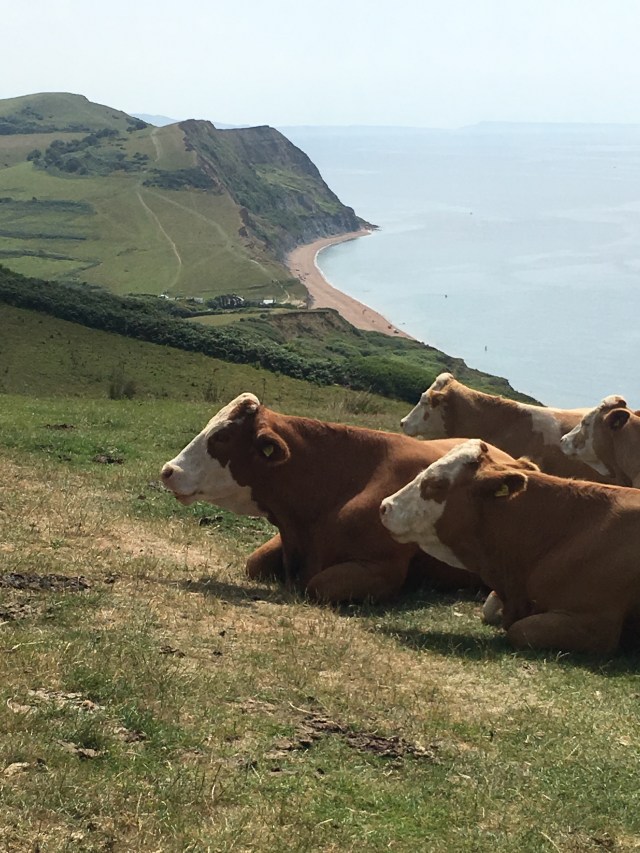
Determined to complete as much of the South Coastal Path in Devon and Dorset as possible, we began filling in gaps section by section. We walked over steep chalk and clay cliffs, through woods and forests, across cow studded fields of bucolic tranquility, along pebbled beaches and, occasionally, down laneways and roadsides.
Armed with a Tesco picnic, bus timetable and our trusty South West Coast Path Guide, we covered many blissful (and blister-full!) miles in glorious summer weather that appeared to be unending.
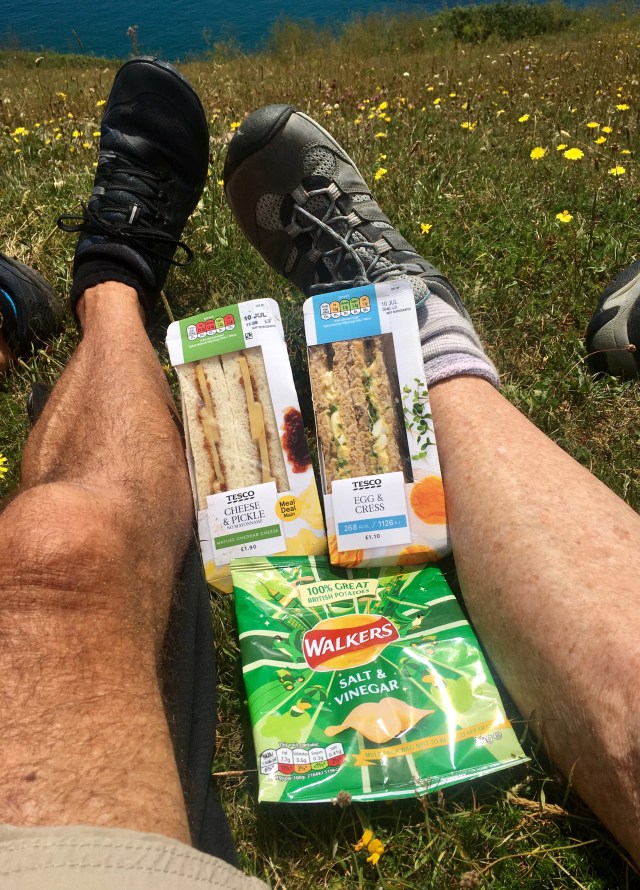
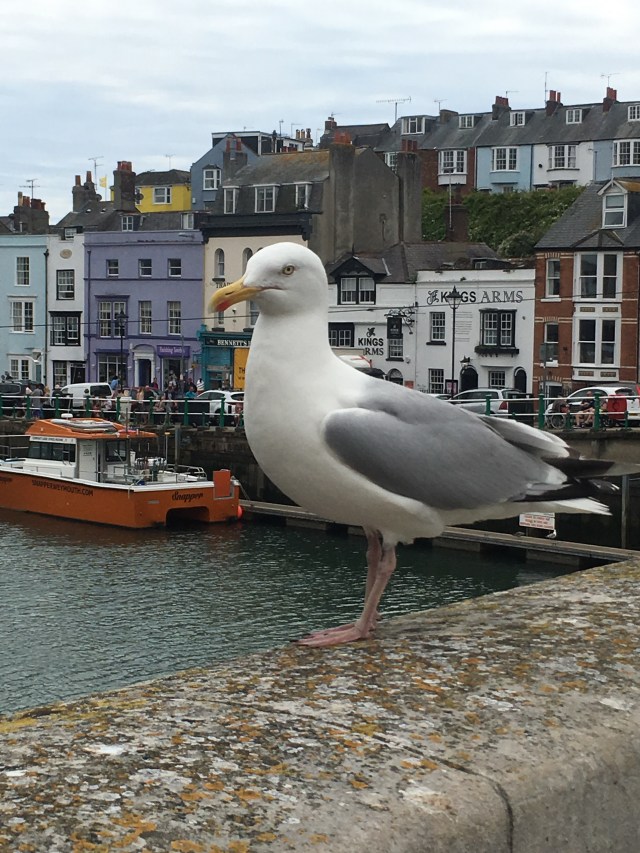
Many non-Aussies we meet on our travels are amazed that we have survived for so long in Australia without being attacked by a shark, bitten by a snake or a spider, stung by a box jelly fish, or eaten by a crocodile. Some marvel at our courage living in such a perilous environment. What no one here mentions is the extreme risk posed by a vicious and savage beachfront attack on the beautiful South Coast that far exceeds any potential dangers back in Oz. Sue suffered just such an attack while we were enjoying a brief lunch break in the popular holiday town of Dawlish in East Devon. An enormous seagull swooped from behind, landed on her arm and attempted to wrestle her sandwich from her. Fortunately it managed a small bite only before our combined strength overcame the beast and it flapped off noisily, only to perch nearby eyeing us with a reproachful glare. It was touch and go for a moment but we saved most of the sandwich and Sue sustained a minor scratch only. The entire episode lasted a few seconds, leaving us badly shaken. After all, it wasn’t just a cheese and pickle sandwich from Tesco, it was a gourmet smoked salmon and egg sandwich from a local providore. Buyer beware!
As migrants to a new country (albeit nearly half a century ago), we have both started to appreciate more and more the value of extended family across the seas and far away. Another reason for parking ourselves in Uplyme was to be close to Graham’s family. We briefly helped cousin Wendy move from her rented flat in Lyme to her newly purchased home in Charmouth, a lovely old cottage on the edge of the village with views to the ocean. We shared pots of tea and biscuits with Roy and Kay in their Charmouth home and we enjoyed some family dinners together as well. Good times that we will replicate later with Sue’s extended family in Essex.
 Clapmacks Foray into Retirement