On a certain sunny Sunday in July, we struck sports gold with the British Grand Prix from Silverstone, the men’s singles final in Wimbledon and the one-day cricket World Cup Final at Lord’s, with England playing New Zealand in the latter. What a feast for sports fanatics! Neither England nor New Zealand had ever won the cricket World Cup, so much was at stake. Plus Englishman Lewis Hamilton was a hot favourite for the Grand Prix and number one and two seeded players (Federer and Djokovic) were slugging it out for a grand slam prize.
To cut to the chase, Djokovic beat Federer in an epic five set battle that could have seen either player the victor; Hamilton squeezed out Bottas to pick up the chequered flag and 26 championship points; and England won an absolute nail-biter at Lord’s that is being heralded as the greatest one-day cricket match of all time. Absolutely amazing! We watched some at home, followed some on our i-Phones and bounced between the telly and the dinner table at Roy and Kay’s in Charmouth.
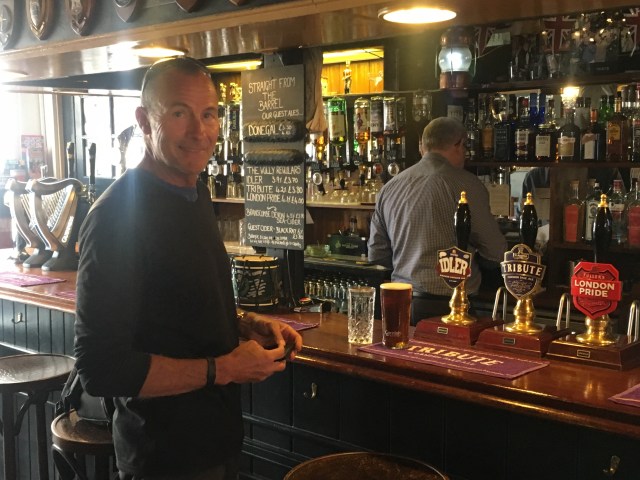
However, apart from us two and our Dorset Family, it appeared that no one else in this sleepy little corner of England was even aware of these momentous events and results. We stopped for a quick pint in a gorgeous pub in Lyme and were met with blank stares when we asked if the cricket was on. Evidently they hadn’t even discovered television at that particular establishment. And nowhere else in the streets or shops was there any evidence of even a spark of recognition that England had just won its first ever cricket World Cup in spectacular fashion (eg flags, bunting, blackboard notices, the faint sound of people singing “Swing low, sweet chariot” etc). As stunningly beautiful as Dorset is, it is also evidently a sporting black hole.
Back on the South Coast Path, we used our third week in Dorset/Devon to launch our attack on the Lyme Regis to Weymouth section. Having previously railed against the unreasonable expense of local bus travel, we bit the bullet and invested in a seven-day bus pass, giving us unlimited use of buses throughout Dorset. Over the ensuing days we became intimately acquainted with the road between Uplyme and Weymouth, catching the bus to various villages in between, walking through to a convenient spot on the trail (ie somewhere with a nice country pub) and catching the bus back to Uplyme. The weather continued to treat us kindly, with warm sunshine, gentle breezes and partial cloud cover following our progress.
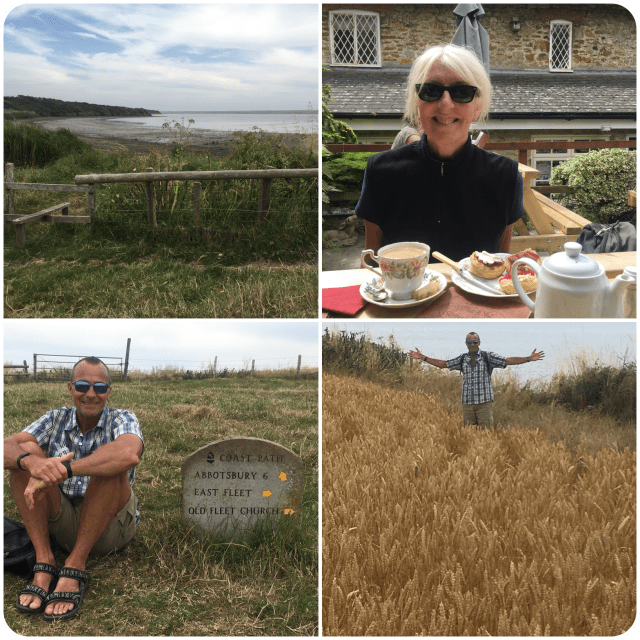
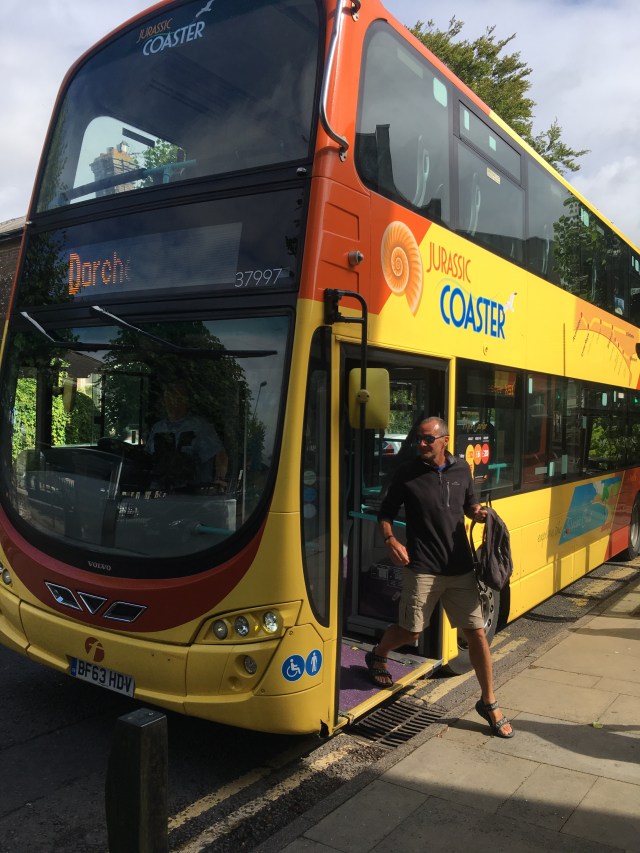
Dorset’s Jurassic Coaster, the X53 bus, traces what is reputedly England’s most scenic bus route (at least that’s what the company’s advertising suggests). Without the knowledge of other scenic bus routes in England it’s impossible to judge, but we certainly wouldn’t argue otherwise as it is a stunningly gorgeous ride – rocky bays, craggy clifftops, rolling meadows, ancient stone- built villages, market towns and coastal plains. We spent literally hours on this bus route basking in the beauty around us.
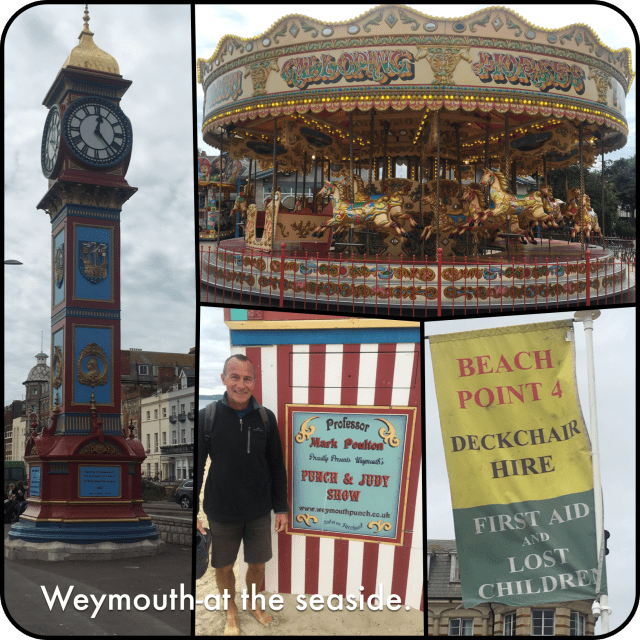
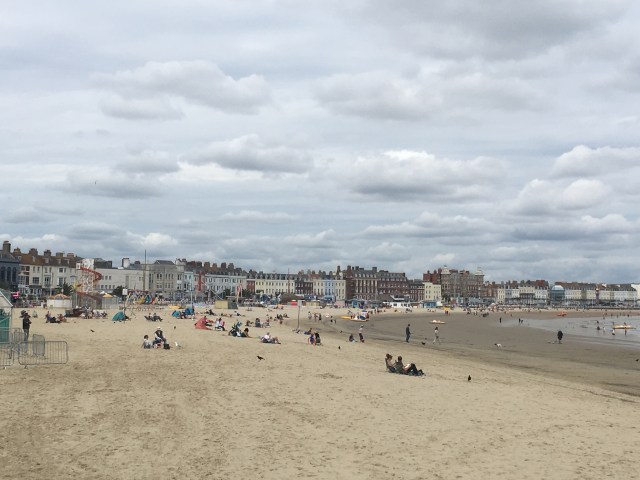
After so many pebble beaches, it was a delight to walk on the soft sands of Weymouth Beach. Here the sand is legendary as one of the finest in the world – microscopic examinations show tiny particles, much smaller on average than any builders’ sand. Weymouth is a typical Victorian seaside town where the stretch of sand leading to the ubiquitous pebbles on the Eastern end of the bay makes an added attraction to the obligatory donkey rides, Punch and Judy show, funfair and amusement arcade. Graham has fond memories of family holidays in Weymouth as a child and the impressive sand sculptures on the beach. The sculptor who practised his craft in the time of Graham’s childhood holidays did so for 75 years. His grandson, who was apprenticed to his grandfather in the 1990s now continues the tradition.
After soaking up the seaside atmosphere of Weymouth, we walked around the marina and then a further eight miles on the Coast Path back to Chickerell. This was cause for celebration as it marked the completion of an 81 mile section of the path from Teignmouth in Devon to Weymouth (including the Isle of Portland) in Dorset. We dined very well at a popular seafood restaurant in Lyme Regis as a result.
The timing of this closure in our somewhat sporadic attempt at linking up walks on the Coast Path was perfect. The cloud cover increased overnight and it started raining persistently throughout the night and all through the next day. Sue was especially relieved as it forced her Terminator husband to stay indoors for a while and gave her aching joints and leg muscles a chance to recover before the next round of torturous marches that she knew was forthcoming (hee hee).
Wessex, the Anglo-Saxon kingdom in the south of Great Britain from the early Fifth Century until the unification of England in the 10th Century. Author Thomas Hardy set all his major novels in the south and south west of England, an area he called Wessex after the medieval kingdom. Armed with this historical information, we ventured to Dorchester, the ancient Roman town and present day county town of Dorset to explore. Once known as Casterbridge, Dorchester is the setting of Hardy’s novel, “The Mayor of Casterbridge”.
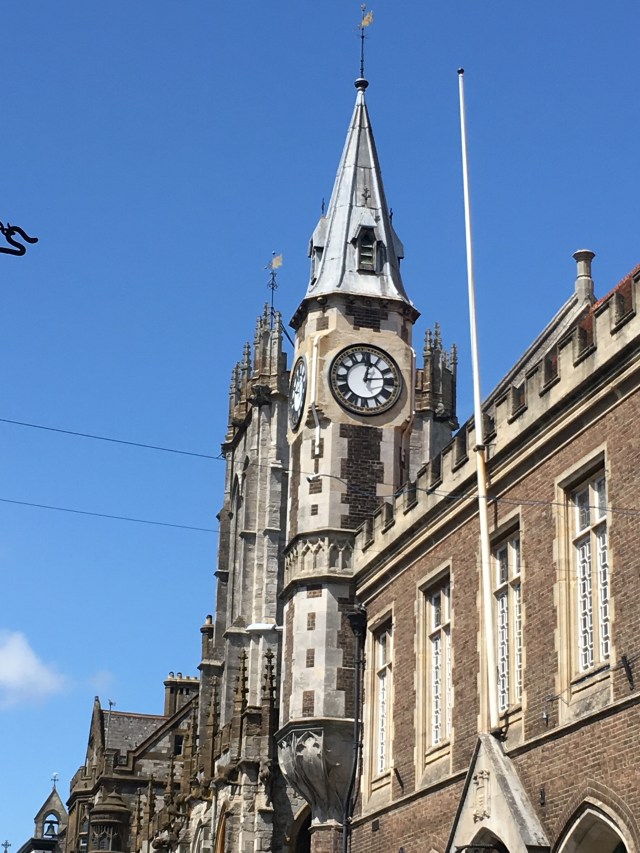
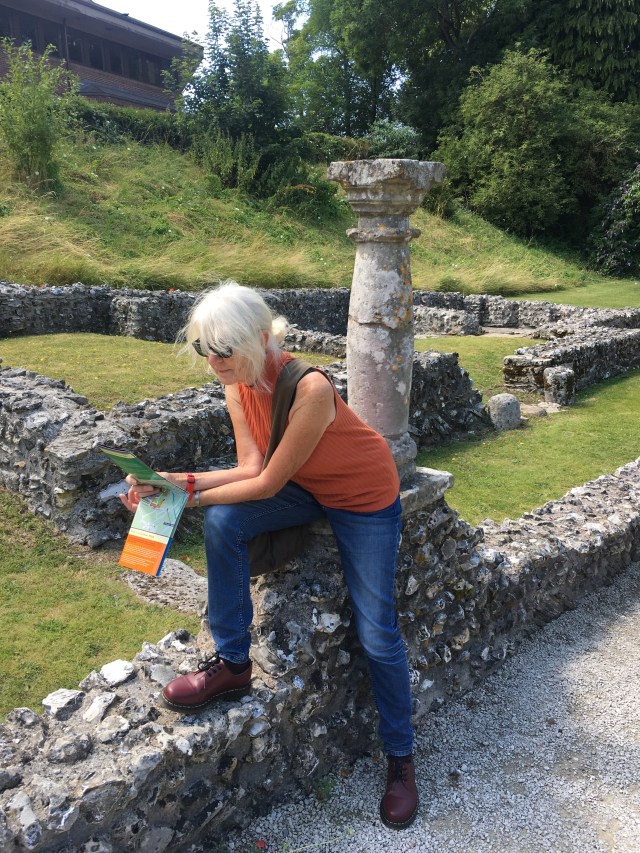
What a gem of a town! Here we found the remains of Roman Walls that once encircled the town and a Roman Town House, the finest example of its kind in Britain. There are many churches, inns, halls, warehouses and homes dating back to the 17th Century in the elegant town centre that still holds a market on Wednesdays, a tradition started in the early 19th Century. The small, beautifully manicured Victorian Borough Gardens won the prestigious Green Flag award for the last three years.
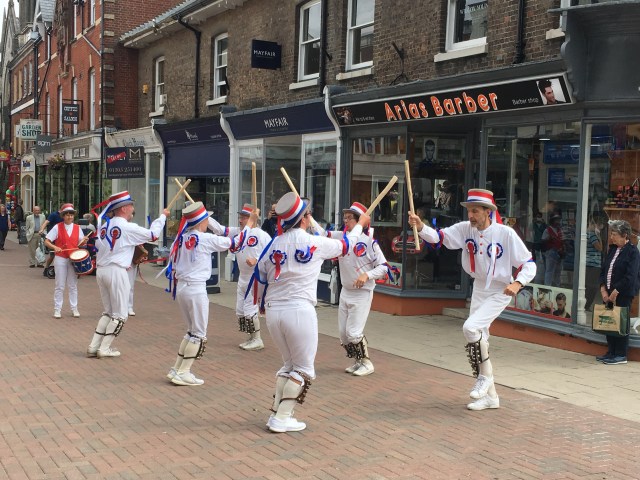
Several specific buildings are mentioned in Hardy’s “Casterbridge” novel, a memorial statue to the novelist stands at the main crossroads and his own house, Max Gate, on the town’s outskirts is now a Hardy museum. But more importantly than all that, Morris Dancers in traditional regalia were demonstrating their weirdly wonderful performance art in the pedestrian thoroughfare, accompanied by folk tunes played on period instruments – an unsurpassed cultural highlight. And, right across the road from the old courthouse where Judge Jeffreys condemned the Tollpuddle Martyrs to their cruel fates, there is a Wetherspoon pub. As previously mentioned, it’s a gem of a town.
 Clapmacks Foray into Retirement