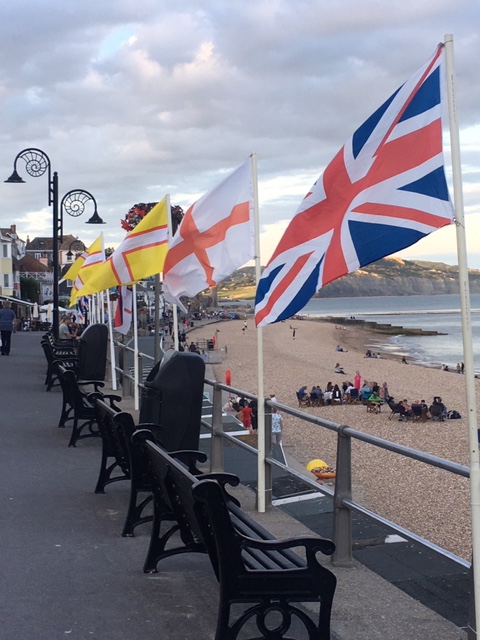
The English weather is a much opined topic of careful consideration that, like politics, liberally sprinkles many conversations here in the UK. Not without good reason. The variable weather conditions dominate almost every aspect of English life, dictating people’s choice of activities and general mood. Summer can be a lottery, so we have truly been very fortunate to experience beautiful weather over the past five weeks of our England adventure.
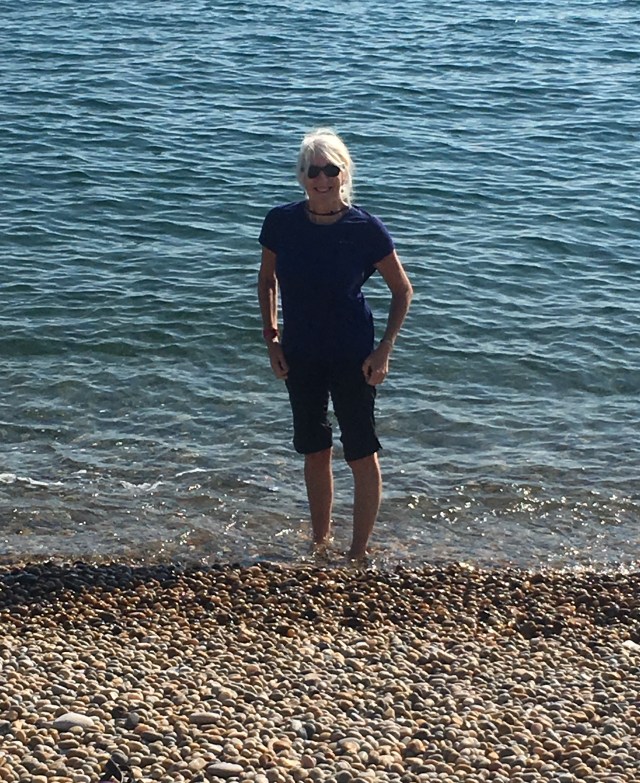
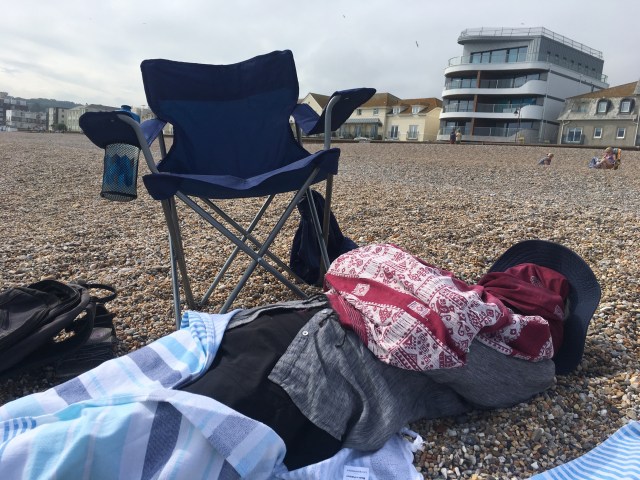
That said, we have seen some variation in the past week. On the beach in Seaton one afternoon, the sky became completely hidden behind cloud and the breeze increased markedly. While Graham still managed to extract whatever warmth was left in the day, enjoying a final half hour on the pebbles, Sue wrapped herself entirely from head to foot in towel and sarong, lying prostrate without an inch of flesh visible. She looked for all the world like an entombed body awaiting burial, which raised a few quizzical eyebrows from passersby who clearly cast Graham as an unsympathetic companion unwilling to forgo his beach time until the undertaker arrived.

That night, the South of England experienced tens of thousands of electrical storms and widespread rain. We slept through the night, blissfully unaware of the spectacular sky show unfolding above us, awakening to a damp world glistening in early sunshine. The clouds passed that day to deliver record temperatures in Central England (approaching 39C in London) that crippled the transport network, leaving thousands of air passengers and commuters stranded and suffering in the extreme heat. Meanwhile on the coast, we enjoyed very pleasant conditions in the mid to high 20s, temperatures that nevertheless challenged the locals’ winter-hardened dispositions.
Is this all the result of climate change or simply the nature of England’s complex geography and proximity to Arctic and Mediterranean climactic conditions? Will the rail lines recover from and survive prolonged exposure to the annual extremes of cold and heat? What will the Government’s response be to the suffering of its citizens during these extremes, particularly the country’s most vulnerable? The English weather is clearly a worthy subject of social discourse.
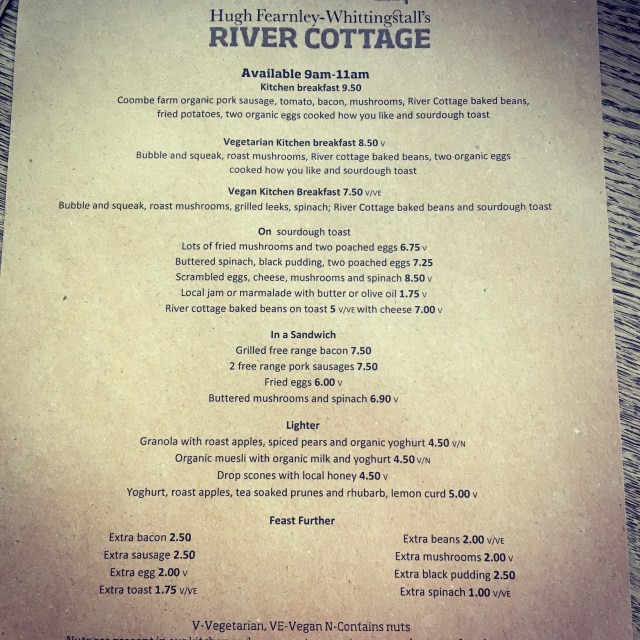
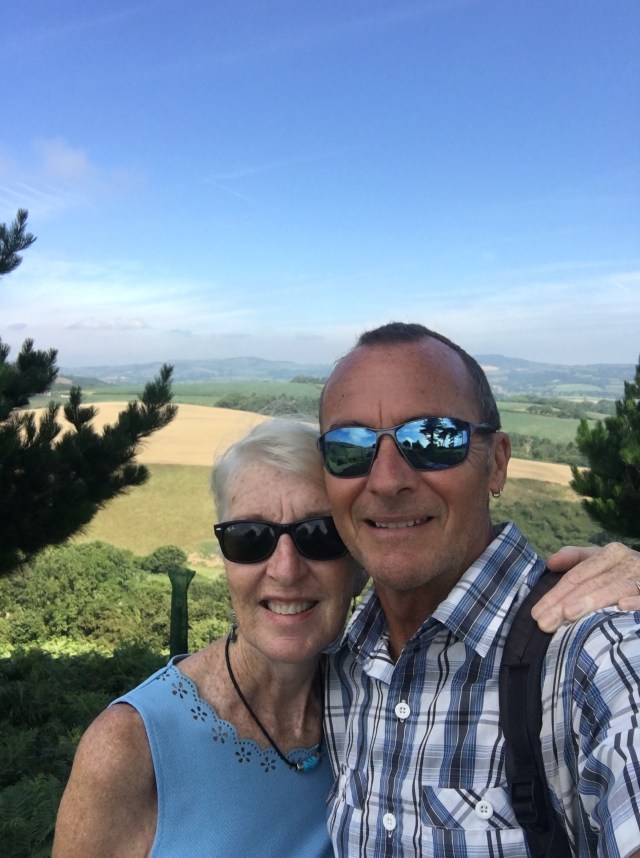 In Axminster, a short drive from Uplyme, we perused the Thursday morning open market in the churchyard of this gorgeous old market town and had breakfast one day in River Cottage Cafe on the square. The small town square centred around the impressive church is lovely and the food at celebrity Hugh Fearnley-Whittingstall’s cafe was delicious (as was the coffee).
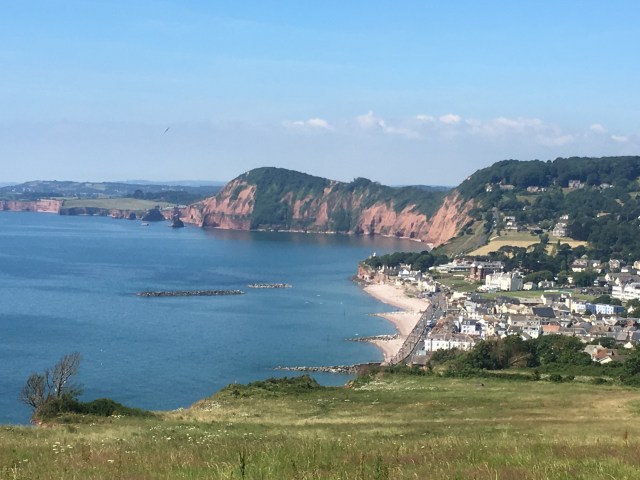
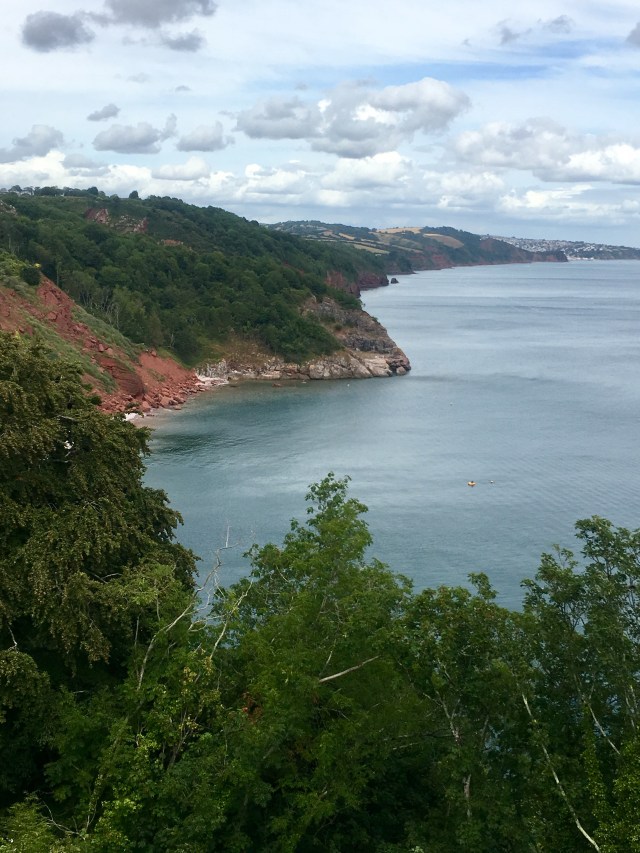
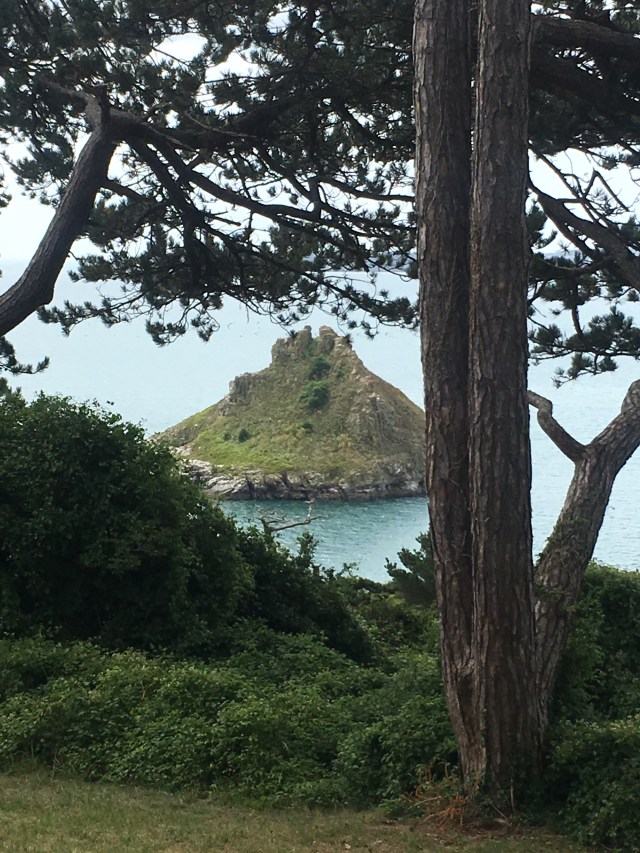
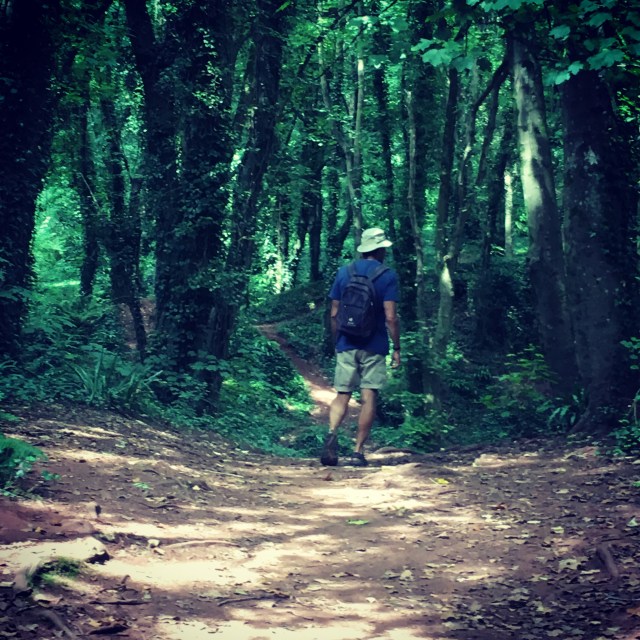
Determined to finish as many sections of the Coast Path as possible, we launched one last attack. The plan was to drive the 70km to Teignmouth via Exeter, hop on the train to Torquay then walk back to Teignmouth. Finishing this 11 mile section would signal the completion of a whole chunk of the Dorset/Devon path from Weymouth to Torquay, a distance of 154.3km (96.4 miles). The guide book alerted us to the challenges of this walk, with steep ascents and descents across the undulating clifftop farmlands and through lush green woods. This it proved to be but also very rewarding with some panoramic views of sweeping Tor Bay and rocky coves studded with old smugglers caves and inlets.
More alarming, however, were the reactions from locals we encountered when we told them of our intention to attempt the walk. Here’s a sample:
“What?! Mental! Why not just catch a train?” from the lively and animated young train conductor on the Great Western Rail line.
“You should be alright. Just take lots of water and food”, from the wide-eyed woman in the Tourist Information Centre.
“You’re doing the uppy downy bit!” from the shocked looking woman with a dog who we passed near the start of the walk.
“Has anyone told you about next bit?” from the incredulous barmaid at the impossibly cute Thatched Inn at Maidencombe, the half way point (where we stopped for a quick shandy), followed by “I did that once with my Mum. Never again!” from her colleague.
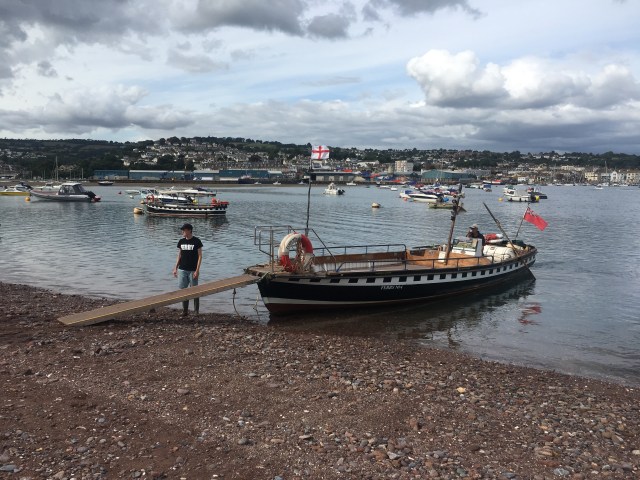
We should have taken heed but the intrepid Clapmacks were not to be beaten (although Graham did wonder if he might have been better equipped in walking shoes rather than reef sandals). Undeterred we managed to finish the gruelling section, allowing ourselves the prize of a little ferry ride at the end, one of the oldest in England, from Shaldon to Teignmouth Harbour and then fish and chips for dinner. You guessed it – there’s a Wetherspoon pub 50m away from Teignmouth Train Station.
One more day on the beach at Seaton, a farewell family dinner in Charmouth and a final stroll along the Lim River path into Lyme to soak up the twilight atmosphere at the harbour and our month in Devon was over. The little “Wendy house” in Steve and Julie’s garden in Uplyme has become a second home for us and we’ve been spoilt by their kind hospitality. So it was with a twinge of sadness that we said goodbye and set our course for the Cotswolds – the next stage of our retirement adventure.
 Clapmacks Foray into Retirement