Airport hotels are a mixed bag. Some are stylish, comfortable, reasonably priced and inside the airport terminal. Some are luxury chain hotels charging exorbitant rates, knowing they have a captive customer base of top end travellers. Some deceitfully purport to be airport hotels simply by their location within a 15km radius of an airport. Some use the term ‘hotel’ optimistically.
It was to this last category that we repaired at Rome’s Fiumicino Airport en route from Italy to Malta. An early morning flight necessitated staying overnight close to the airport to avoid a ridiculous taxi fare from Rome central. So when we arrived at Fiumicino Airport to discover that Airport One Hotel was, in fact, 8km away by road on the opposite side of the runway, we were faced with two options: one, pay €40 for a taxi or two, wait for a local bus that may or may not show up to take us into Fiumicino and, possibly, close to the hotel. We chose the latter, purchasing our tickets at the kiosk inside the terminal for €1.10 each instead of €7 each from the driver, and then waiting with a group of other expectant travellers at the airport bus stop.
Fortunately, a bus did arrive and we made the journey through early evening seaside holiday traffic (Fiumicino is one of Rome’s beachfront areas) to what Google maps suggested was our hotel. We alighted on a dark road running alongside one of the airport runways at a petrol station with a broken sign for Airport One Hotel behind it. This turned out to be a rundown but nonetheless functioning, relatively clean motel, with a row of rooms tucked behind a fence screening off the petrol bowsers and with jets taking off from the neighbouring airport thundering overhead every five minutes or so.
With earplugs and eye masks we managed some sleep, then waited roadside in the pre-dawn gloom at 5.00am for our promised shuttle ride (€6 each – substantially cheaper than a €40 taxi ride) to the terminal, 8km away across the runway. With our departure time looming and no sign of our shuttle bus, anxiety levels were increasing but a phone call to a number pasted on the locked door of the motel’s tiny reception allayed further fears and a speedy, nerve wracking ride delivered us finally back at the terminal on time for our flight to Malta.
The cost of the motel was €60, very cheap compared with other hotels in and around Rome and our bus and shuttle fares amounted to €14.20. So for a total of €74.20 we had an overnight stop in Rome ahead of an early flight out. We had saved ourselves, potentially, around €65 in taxi fares and up to €150 in airport hotel accommodation. We were tired from lack of sleep and somewhat stressed from high levels of anxiety but it was worth it financially and for the addition it made to our mounting store of traveller tales.
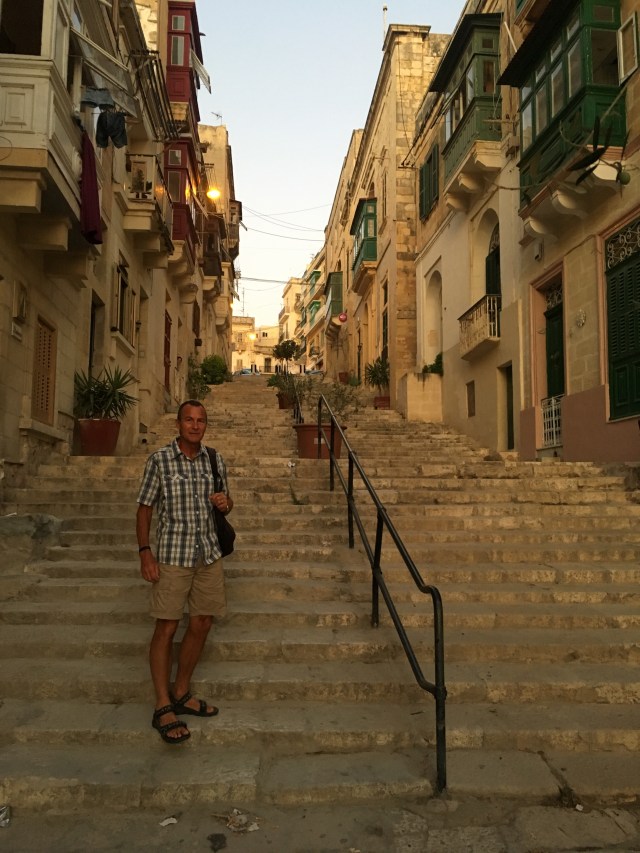
Arriving in Malta with very little research under our belts, expectations were limited to crosses, a falcon and small white fluffy dogs. We also knew that there would be lots of water, Malta being an island in the Southern Mediterranean. What we weren’t prepared for was unseasonably hot and humid weather conditions that left us damp and exhausted for much of the first three days. These distractions aside, we quickly settled into our lovely modern AirBnB apartment in an old building in the Bormla, one of the “Three Cities” constituting the old Harbourside area of the capital, Valletta. From here and over the ensuing days we discovered the charms of this fascinating island country with its various cultural influences and intriguing history.
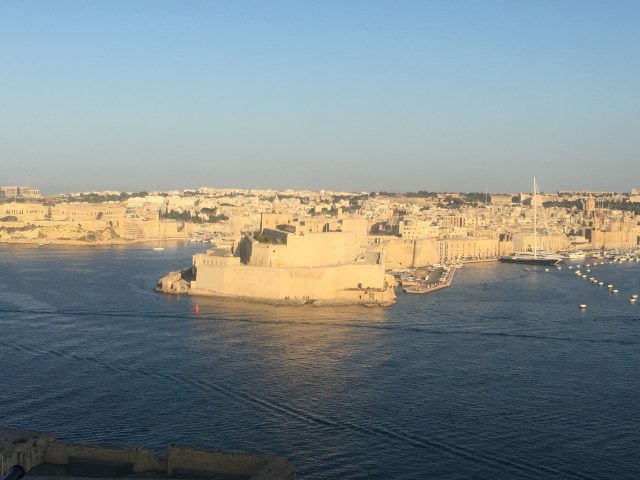
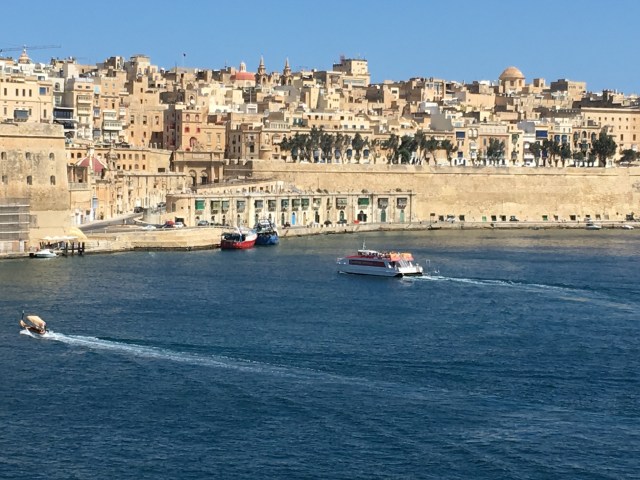
Added to this an amazing harbour city that crawls over the hills of the small promontories lining the bay and bristles with beautiful stone buildings and fortifications, a collection of ancient and medieval sites, overblown crowded beachside resort areas with all the trappings of a popular Mediterranean holiday destination and Malta seams to have everything for every enthusiastic holidaymaker who visits here. And there are three million annually. The EU has invested €1.1 billion to ensure they keep coming!
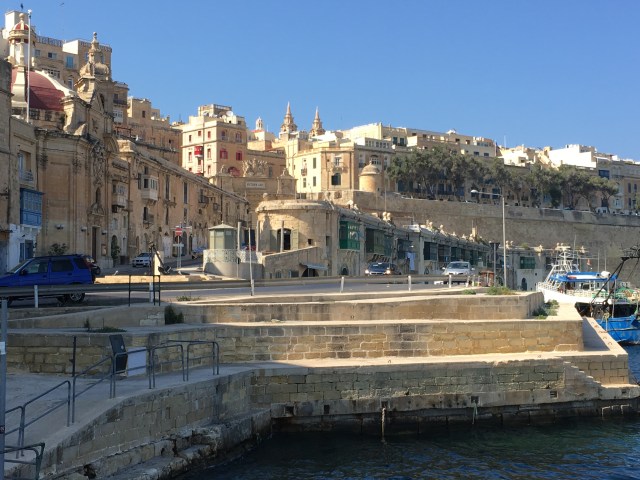
Much of these funds have been and continue to be used to repair and restore old buildings that were destroyed or damaged by German bombs during WWII. The results are obvious and quite remarkable. Fortified walls, batteries and bastion lookouts line the harbour, ornate catholic churches sit atop the steeply rising streets climbing off the waterfront, balconied houses and civic buildings gaze at each other across the water and along flights of steps linking the winding streetscape, all stone built. The streets and squares are laid in stone that’s worn smooth through centuries of use. We were glad of the dry weather (Malta hadn’t seen rain for three months prior to our visit) as they are slippery and would be treacherous when wet.
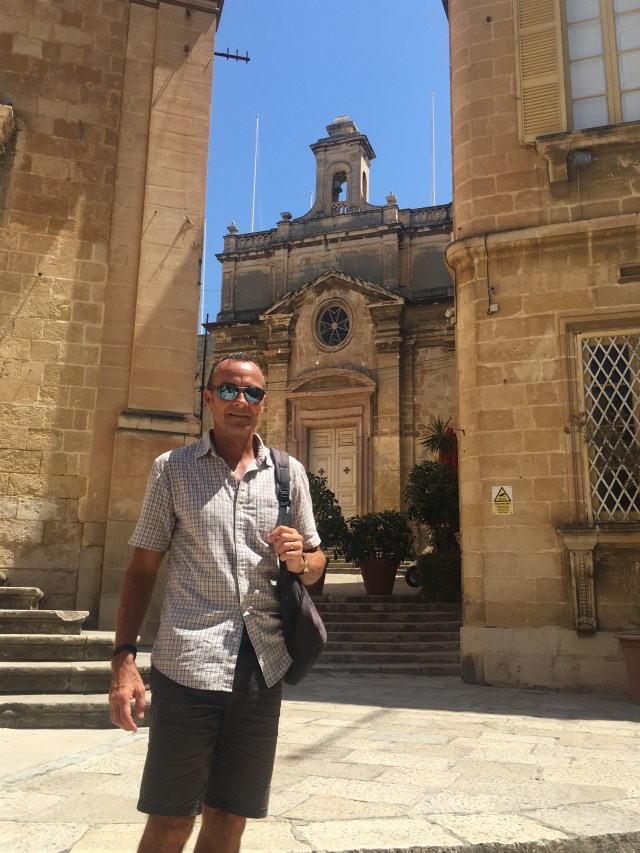
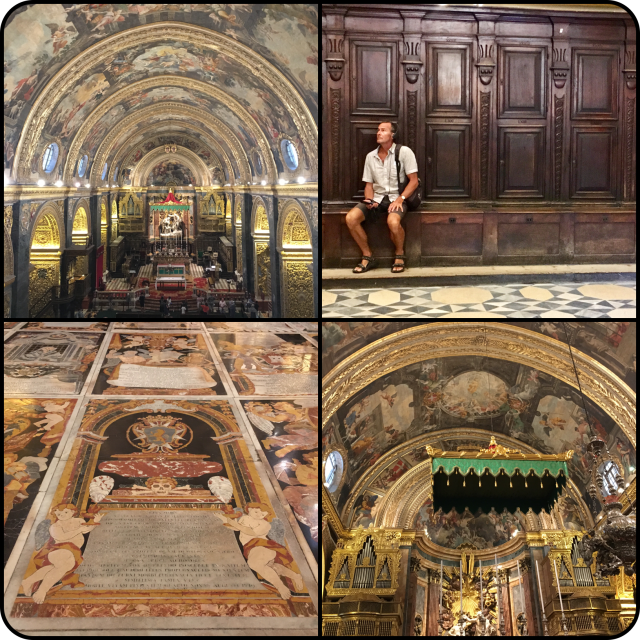
Having suffered the vagaries of Italy’s casual transport system, it was a delight to navigate Malta’s clean, modern buses that provide an extensive service across the entire island and neighbouring Gozo. For €21 each we had unlimited access for seven days, and made the most of it. The old walled capital of Valletta is a great example of a restored medieval town with a spectacular cathedral (St John’s Co-Cathedral), palace and associated museums and armouries. We loved it. The Co-Cathedral is of particular note being one of the world’s greatest Baroque churches. It also contains two Caravaggio masterpieces and Caravaggio himself had a connection with Malta – he was a troublesome warrior monk who lived and was briefly imprisoned in Valletta.
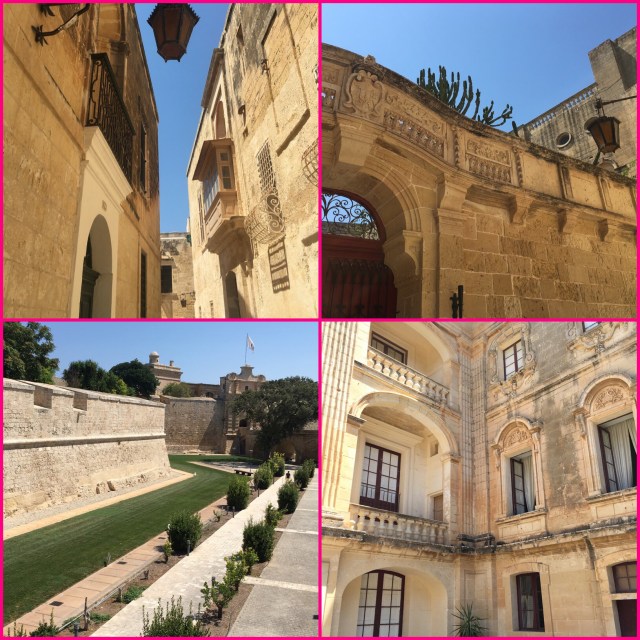
In the central old town of M’dina, we were reminded of our travels last year in Obidos, Portugal. Both are stunning, small, restored Medieval cities where a few hundred people still live and the quiet, narrow, rambling streets echo with the ghosts of a bygone era. Thematic, eery and truly magical.
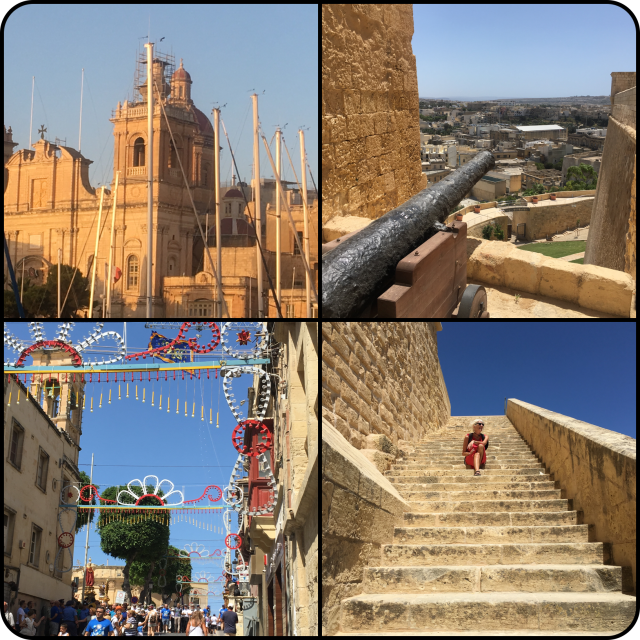
On Gozo, a very long day trip on a hot Maltese Wednesday, we visited the old Citadel, another walled city set on Roman ruins with a range of small informative museums. A living piece of history like so many ancient towns and cities throughout Europe. Right up our alley.
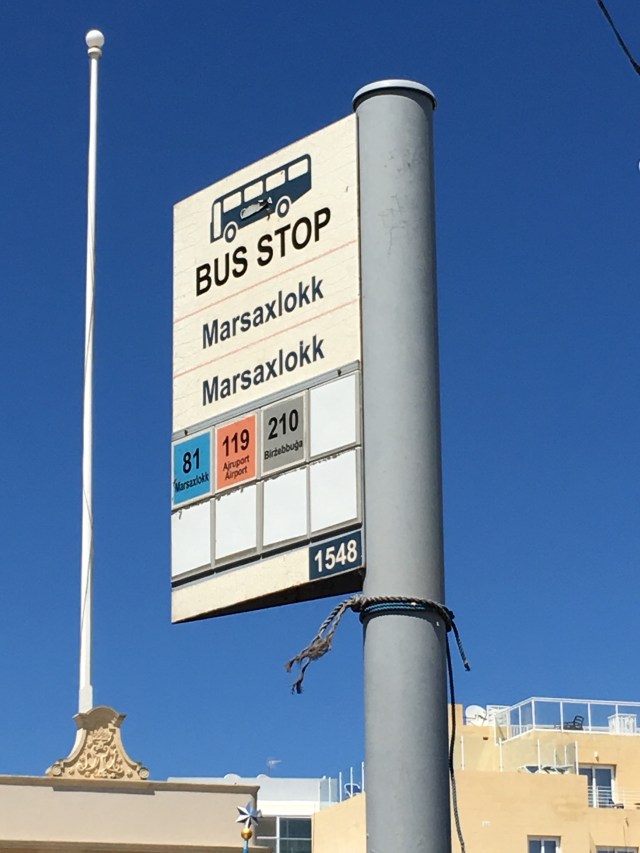
Another day trip saw us in Marsaxlokk, a little fishing village on the South Eastern coast of the island. Traditional fishing boats called luzzus bob about in the harbour while larger ships ply the waterways in and out of the neighbouring industrial port. The harbour front is crammed with stalls in a covered market selling all manner of tourist tat and alfresco restaurants with billboard specials offering fresh seafood platters compete for the tourist dollar.
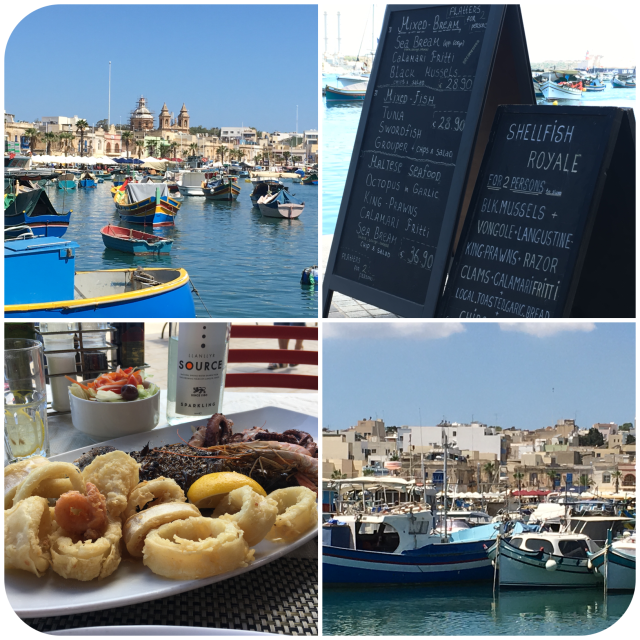
A number of small water taxis transport people to the popular swimming beaches at St Peter and Pretty Bay nearby. Eschewing the virtues of the tourist beaches we opted for a patch of sand at the northern edge of the harbour where the locals go. Here we enjoyed some down time in the sun, watching the antics of families gathered under makeshift shelters with their picnics and blow up water toys for the children. After working up an appetite we indulged in an excellent seafood platter at one the waterfront restaurants.
What did we learn about Malta during our stay? We’re glad you asked….
We didn’t see many birds and the only falcon we saw was a stuffed peregrine falcon in the Natural History Museum on Gozo.
There were lots of dogs and evidence of dogs at regular intervals on the footpaths around Velletta but not one single example of a Maltese crossed our path.
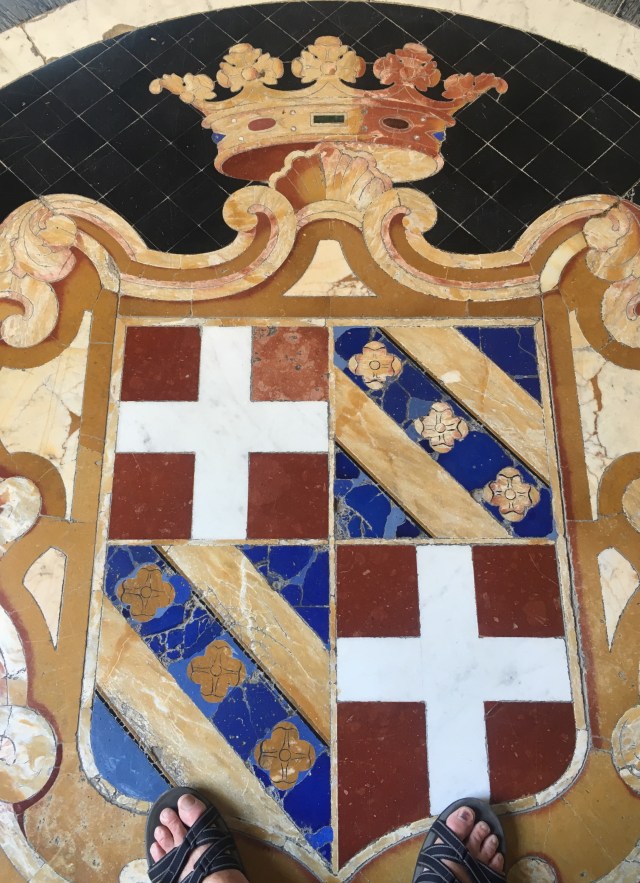
The cross, however, is quite another matter. The familiar eight pointed cross of St John is the symbol of the Order of the Knights of St John, who ruled Malta as a vassal state of the Kingdom of Sicily from 1530 to 1798. Its image adorns windows, flags, statuary, manhole covers, tea towels (you get the picture) everywhere.
We also discovered that due to Malta being close to North Africa and subject to northerly winds, everything gets coated in a fine layer of Saharan sand. Dry, windy, hot and dusty – just like summer in Perth.
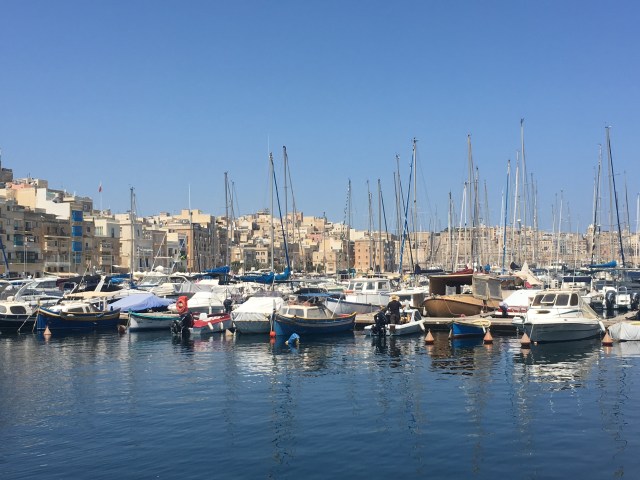
Then of course there’s the boats. Two years ago when we travelled down the Dalmatian Coast we saw what we thought was half the world’s population of water crafts in the numerous marinas and harbours there. But when we got to Malta, we realised we’d hit the motherlode. With harbours, bays and marinas all around the island, there are literally hundreds, probably thousands of boats of all types and sizes, from multi-million dollar super yachts to tiny painted wooden fishing boats; cruise ships, oil tankers and container ships in the main harbour and port; passenger ferries and traditional gondola style pleasure boats. If you’re partial to a bit of messing about in boats, Malta is definitely your Nirvana.
Malta is a nation of contrasts. Inhabited from pre-historic days and then ruled by a succession of Eastern and Western powers right up to 1974 when it gained its independence from Britain, the varying cultural influences are evident in its architecture, cuisine and language. The two official languages are English (no problem with that one) and Maltese (an indistinguishable barrage of semi-glottal “shushing” sounds, all uttered at high volume). Maltese is a Semitic language, one of the Arabic route languages. We eventually gave up on trying to pronounce place names, many containing unfamiliar series of the letter x and double k. We made up our own silly Anglicised approximations instead, but only between ourselves so as not to offend the locals. These are the everyday amusements that litter the flotsam and jetsam of our journeys.
Leaving Malta was always going to be a long day. Longer than we had imagined, as it turned out. Here’s our second transit traveller story to bookend this blog post:
We rose at 5.00am in order to catch two buses to the airport for our morning flight to Rome Fiumicino. Arriving in Rome around 11.00am we had time to kill before our evening flight from Rome’s Ciampino Airport to East Midlands, UK. So we bought a two way ticket on an airport transfer bus and went into Rome Termini. Here we whiled away a few hours over lunch in the Central Market, then sat in a very dodgy park nearby where local characters were drinking beer and washing their shoes, leaving them out in the sun to dry. Strange, we thought, but then without doing our research, we were eventually going to encounter “Laundry Park for the Homeless and Unemployed”.
g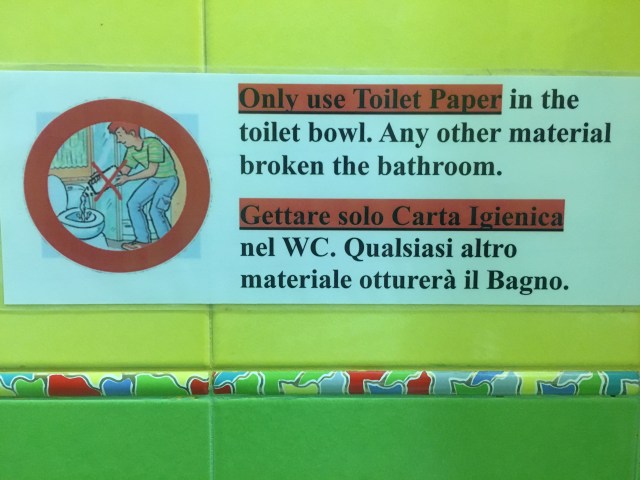
Finally making our way out to Campino Airport we were by now tired and looking forward to hopping on the 10.00pm bus at the other end to get us home to the girls in Stapleford. So when the flight was delayed by 45 minutes we knew we weren’t going to make it and the 11.00pm bus it would have to be.
When we arrived at East Midlands Airport at 10.30pm it was 16C – rather chilly after Malta and Rome. So we waited in our inadequate summer holiday clothing until the 11.00pm bus arrived at 11.20pm. Fortunately for us, the only passengers silly enough to wait around for so long, the very apologetic driver allowed us to ride for free as he was late, explaining as he let us on that there was a mechanical problem but he had been advised by the depot to carry on regardless. We carried on regardless for a few miles before the bus broke down at Castle Donington, essentially a small residential estate in the middle of nowhere. During the ensuing hour we got to know the driver quite well, chatting amiably as we did whilst waiting for the mechanics to arrive and the taxi, coming from Nottingham, to assist us with completing our journey. With no heating the draughty bus offered no protection from the cold. We huddled together in our shorts and tea shirts, not understanding how a taxi could get lost (it did) or why there should suddenly be a power cut in the area (there was), plunging us into complete darkness save for the lights inside the bus.
Ironically, while this was happening, Amy and Claire, who were waiting for us in Stapleford, also experienced an electrical issue in their house and had a troop of electricians from the service provider in their home trying to locate the fault that had rendered them powerless. This they managed in part, so when the taxi (the driver located us eventually) delivered us to our “home away from home”, it was 1.20am, we were frozen and shivering and the house had no power in the kitchen. Needless to say we crawled thankfully into bed and both fell into an exhausted sleep as our fingers and toes began to slowly thaw out.
Ah yes, the trials and tribulations of travel, but at least we had a bed for the night, unlike the raggedy men in Laundry Park, Rome – may their shoes be fresh and dry.
 Clapmacks Foray into Retirement