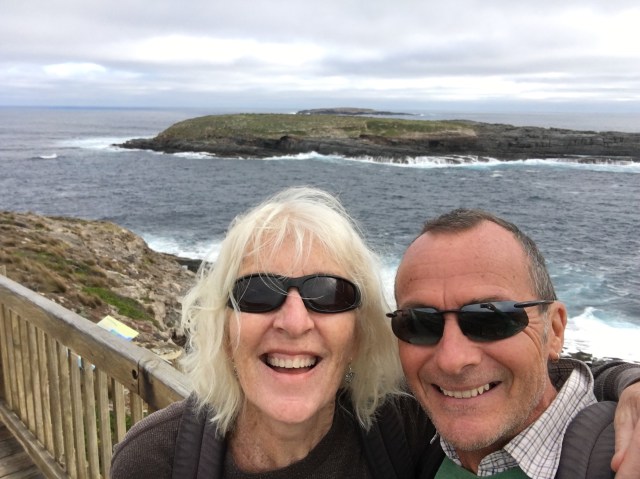
In typical Clapmack travelling fashion, we had arrived in South Australia underprepared and with no expectations of what the ensuing four weeks might reveal. To be fair, we had just spent the previous three months in Europe and our heads were still to some degree in the Northern Hemisphere. Plus, we had been involved in planning and organising some of the activities for the four-day Piggies 60th Birthday celebrations in McLaren Vale. And we were joining Tom and Liz for a five-day hike on Kangaroo Island’s Wilderness Trail. So on reflection, maybe we were slightly prepared, for the first week and a half at least. But other than that, we had nothing except a few vague recommendations and hitherto unknown place names to guide us on our journey of discovery.
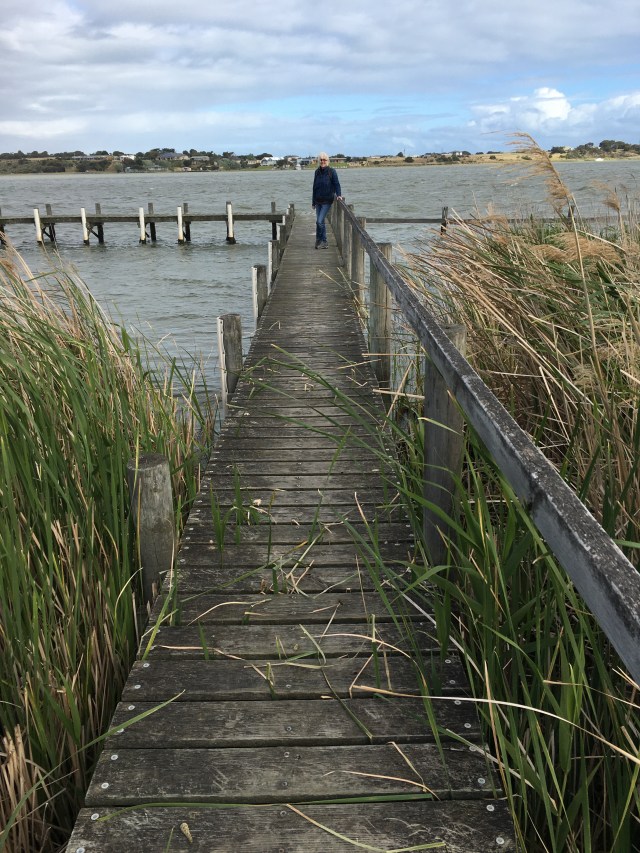
Over the past quarter of a century we have spent the majority of our holiday/travel time overseas. The vast country that is our home remains mainly undiscovered to us. There are various reasons for this: we have a strong desire to return to the country of our birth where we have many relatives and friends; there are so many countries out there still to discover; Australia will always be here for us when we tire of travelling overseas; it’s often cheaper to travel to destinations in South East Asia (for example) than within our own country – a significant factor in our early days together; all of our children are currently overseas, so we need to leave our shores if we are to see them on a regular basis.
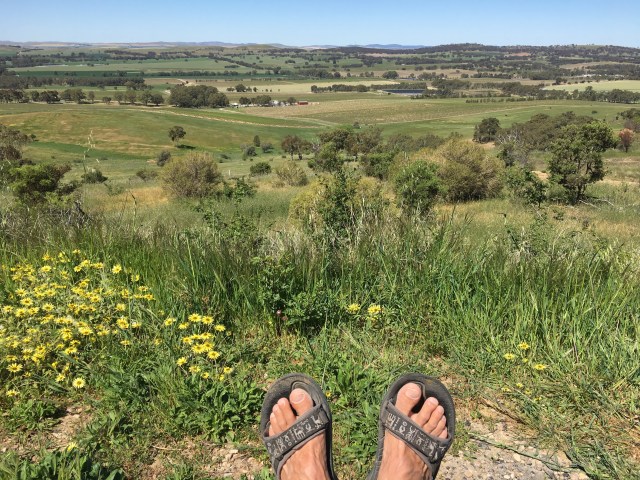
Imagine, therefore, our delight on discovering in the regions surrounding Adelaide, idyllic scenery, well preserved national history, quaint villages and towns, unhurried and uncrowded roads and highways, a helpful and user friendly tourism infrastructure. All of this made for an exceptional fortnight and a most agreeable introduction to uncovering the broad and varied travel destinations right here in Australia that loom on our future travel radar.
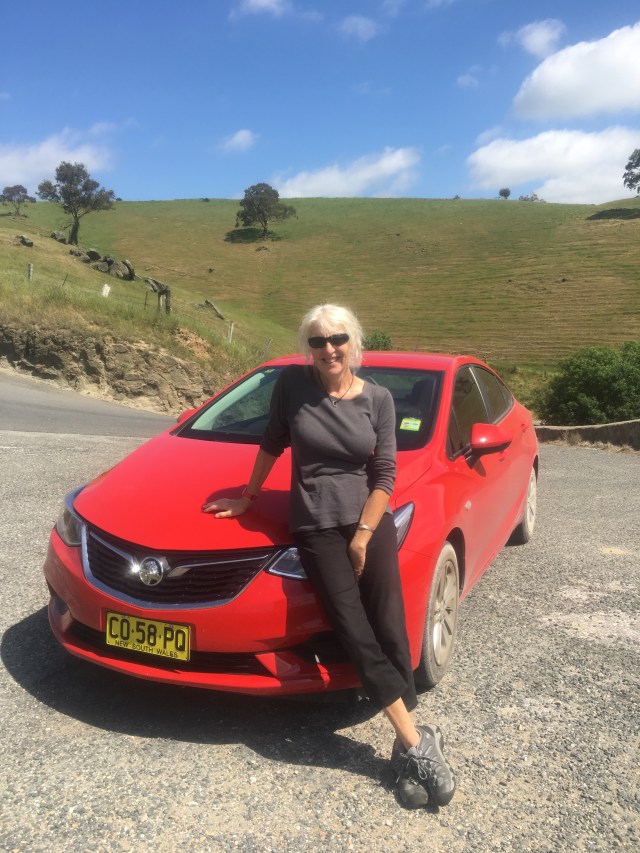
With a hire car at our disposable and two weeks of unstructured time to fill before our return, we had two choices to consider: 1) cover as many miles as possible and see as much of South Australia as manageable within this timeframe, or 2) take a slow leisurely pace and restrict our sightseeing activities to wine-growing regions surrounding Adelaide. Naturally our new-found, retirement lifestyle, incorporating the principle elements of slow-living, demanded that we choose the latter. So we did.
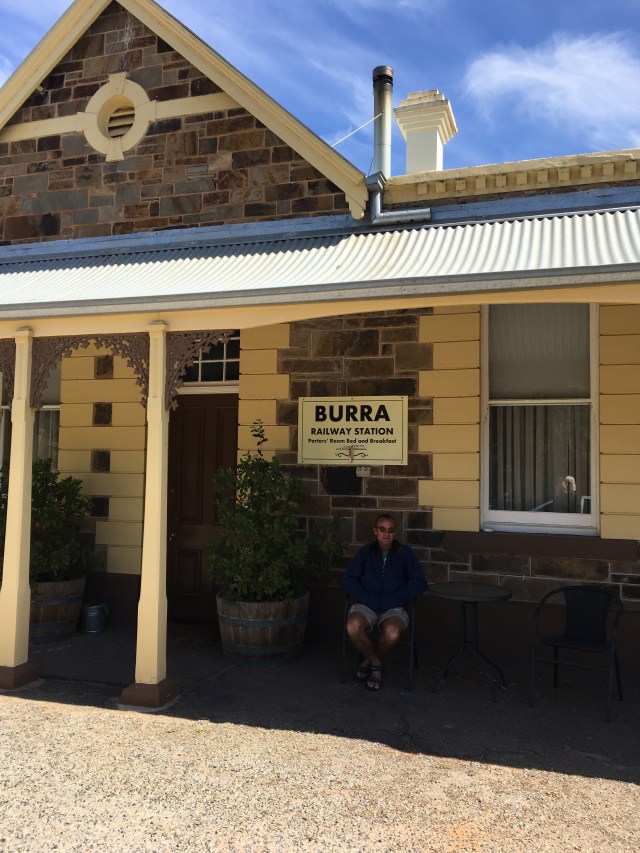
Tracking a path north from Adelaide, we ventured first to Burra, home of South Australia’s first copper mining boom, then Clare Valley just south of Burra, onwards south-east to the Barossa and the Adelaide Hills, ending at the eastern side of the Fleurieu Peninsula. Using AirBnB, our go-to accommodation option, we tried to stay a minimum of three nights in each place, giving plenty of time to explore. Highlights were numerous, in both the scenery and the quality of our accommodation. A snapshot of each region and what we found especially noteworthy follows.
Burra
This well-preserved town is steeped in history:
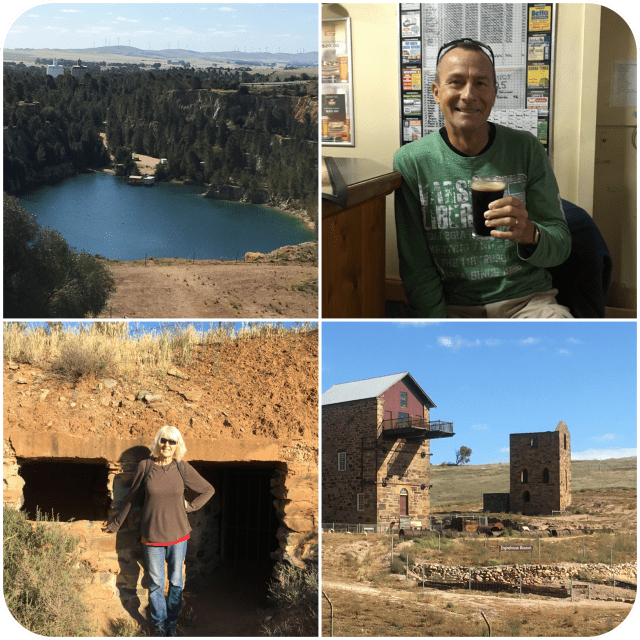
• It’s the oldest mining town in SA and was the largest inland town in Australia in its heyday during the 1850s
• There’s a strong connection to the Cornish mining and Welsh smelting traditions. The Cornish influence piqued our interest, given our previous devotion to the South West Coastal Path in Cornwall.
• Town Passport – a creative tourist device that allows keyed access to various historical sites around town, including old mine sites, a Cornish engine house, a tailor’s house (with some detailed social history), miners’ cottages and gardens, the old Gail then girls’ reformatory where the film Breaker Morant was filmed, old dugouts built and occupied by miners who couldn’t find other accommodation at the time. All well curated and fascinating.
• An interesting old-fashioned outback pub experience – we felt we’d stepped back in time as we sipped our local craft beers at the sports bar of a working man’s pub.
• A traditional motel, where we stayed for one night in order to finish the self-guided Town Passport tour. The 1970s styled rooms backed onto a tiny river, from which resident ducks visited us for a breakfast feed.
Clare Valley
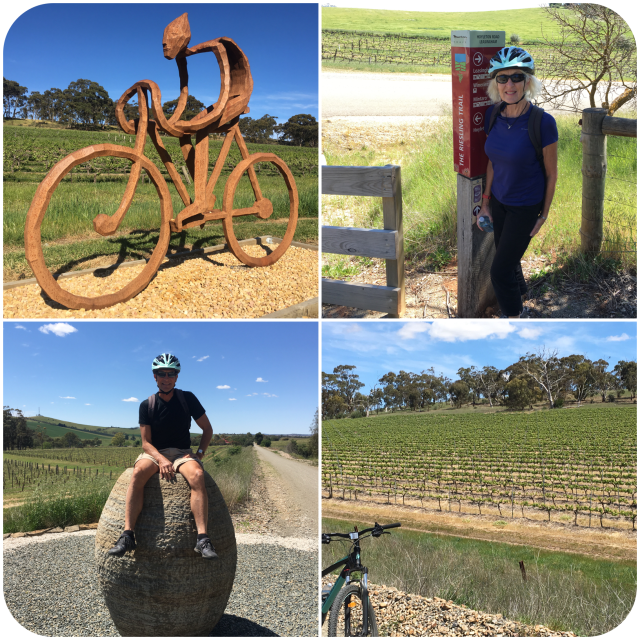
• The Riesling Trail, a walking/riding track that follows the path of an old railway line through farmlands and vineyards. We hired two bikes from our garden studio accommodation on the outskirts of Clare and rode the entire length and back over three days, from Auburn to Barinia. Information boards describing the old railway stations and sidings and clever public artworks punctuate the trail.
• The Clare Valley Visitor Centre featuring local wines and produce. We joined our AirBnB hosts one evening for a community wine tasting event – an opportunity for locals and visitors to socialise together.
• Sevenhills Winery and church – the first Jesuit monastery in Australia and the oldest winery in the Clare Valley (1851). This beautiful old church and adjoining winery still produces sweet altar wine for whole of South Australia. A rare crypt under the church holds the remains of 39 Jesuit fathers and brothers, including Hitler’s uncle (according to some unpublicised local knowledge).
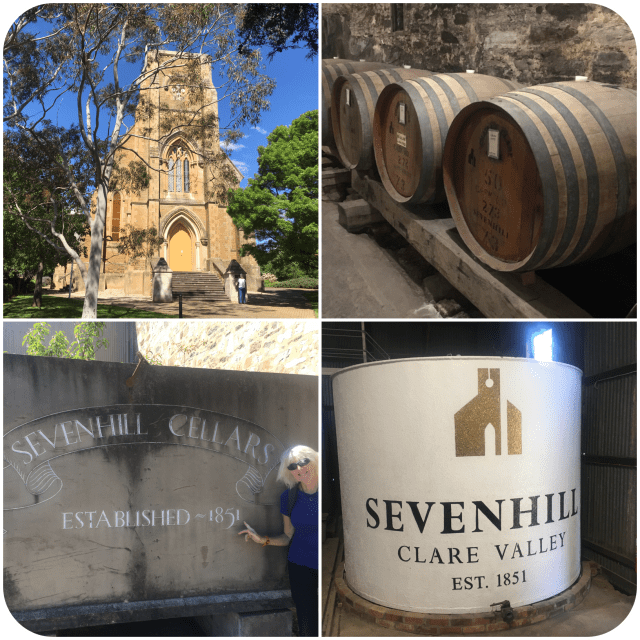
• Many small boutique family run wineries – we found these casual and personal, much less formal and commercial than wineries in other areas such as Barossa and McLaren Vale.
• Beautiful gently rolling farmlands and old villages, including the historic mining town of Mintaro with Martindale Hall, one of very few Australian grand homesteads in the English tradition.
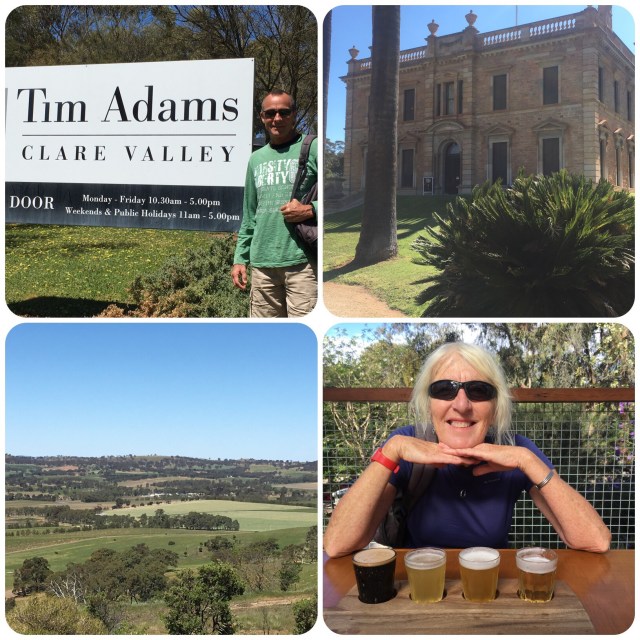
• Lots of wildlife – birds and colourful parrots, bobtails, brown snakes, kangaroos. Sue is always anxious when snakes are around, not through fear of the reptiles themselves, but because Graham loves them and is likely to put himself in danger to get a closer look. One notable occasion on the Riesling Trail had Sue quickly side-stepping out of the way of a poisonous brown snake crossing the path, only due to Graham’s enthusiastic encouragement of the animal’s progress.
Barossa
• Lots of historic towns and villages, including Bethany, the first of many German settlements and the oldest village and vineyard in the Barossa.
• Several vast, iconic commercial vineyards in the large flat valley.
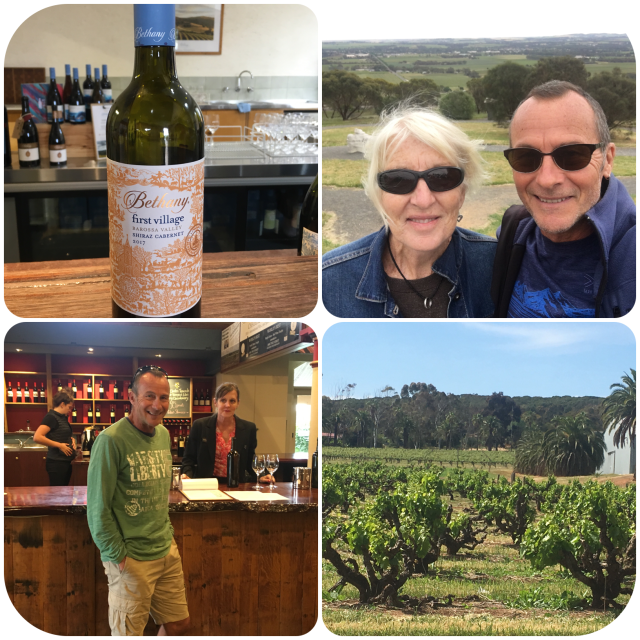
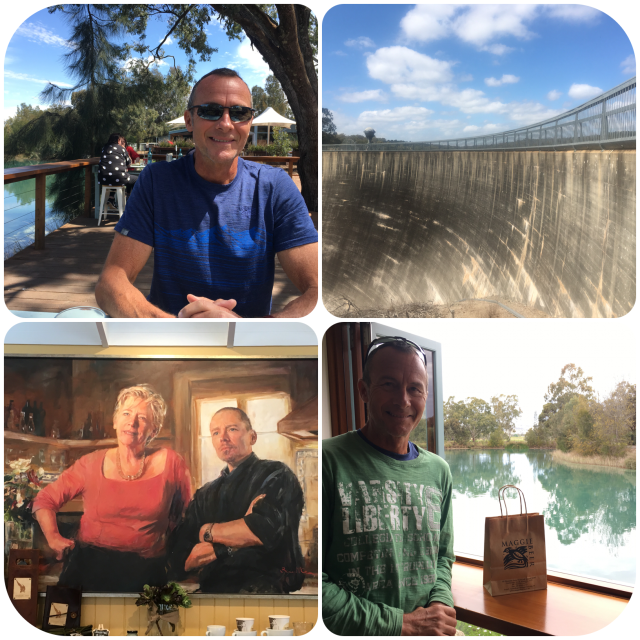
• Maggie Beer’s Farm Shop and Eatery. After becoming hooked on “The Cook and The Chef” on the SBS food channel while in SA, we had to visit. At this beautiful setting on Maggie Beer’s original pheasant farm, we enjoyed a scrumptious chef’s long lunch overlooking the lake.
• Barossa Reservoir, with the famous Whispering Wall formed by the retaining wall. Built at the start of the 20th Century, the reservoir was an engineering marvel of its time, but the attraction now is the Whispering Wall, where a tiny voice at one end can be heard clearly at the other, over 100m away. Eerie!
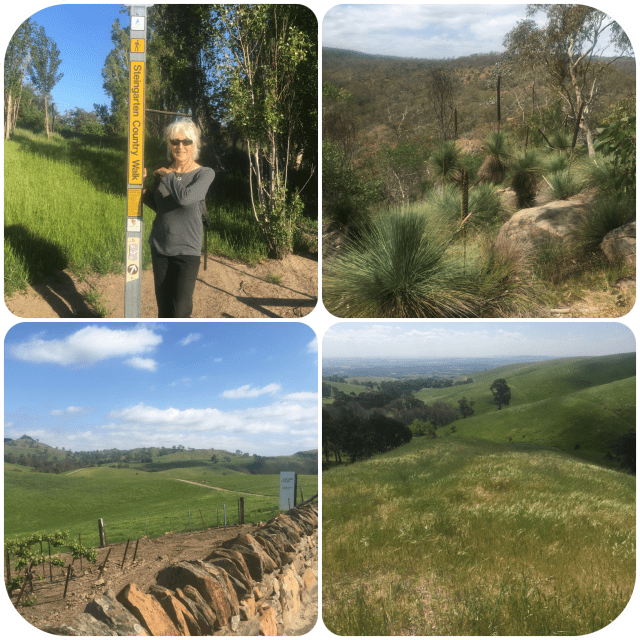
• The Steingarten Walk through Jacob’s Creek’s premium winery with kangaroos in the vineyard, amazing views, down into the Jacob’s Creek valley and back up to the summit.
• A host of iconic Aussie wineries. We sampled a few:
• Seppeltsfield, a grand estate with a palm-tree lined promenade and lawned gardens. Specialising in fortified wines, their famous Para Port, named after the local river, is a classic. Tasting comes at a cost, which limited our palate, but we at least had a viewing (and a sniff) of a small vial containing a thick, syrupy 100 year-old port.
• Penfolds, home of Australia’s most famous red, the Grange. Under the direction of a helpful and knowledgeable young assistant, we tried a range of magnificent reds. All the big bin numbers were on show, including Grange and Bin 389, the “poor man’s Grange” (at over $100 a pop, not everyone’s “poor” enough to drink it!)
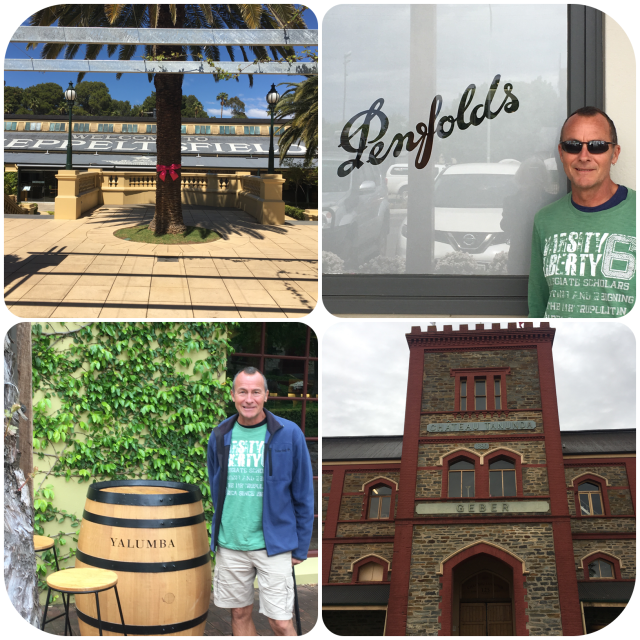
• Yalumba, a truly beautiful setting. The main building resembles a French chateau, the premium wines more of the Australian characteristics.
• Chateau Tanunda – who can forget the 1970s advertising campaign? (“No wonder, no wonder, it’s Chateau Tanunda”). We simply had to check it out. The amazing old grand chateau has been fully restored after years of neglect with the new family owned company attempting a resurgence of the classic Aussie label. Good luck to them! (They may need it – the wines I tasted were a little thin and not, in my opinion, up to the standard of their impressive neighbours.)
Adelaide Hills
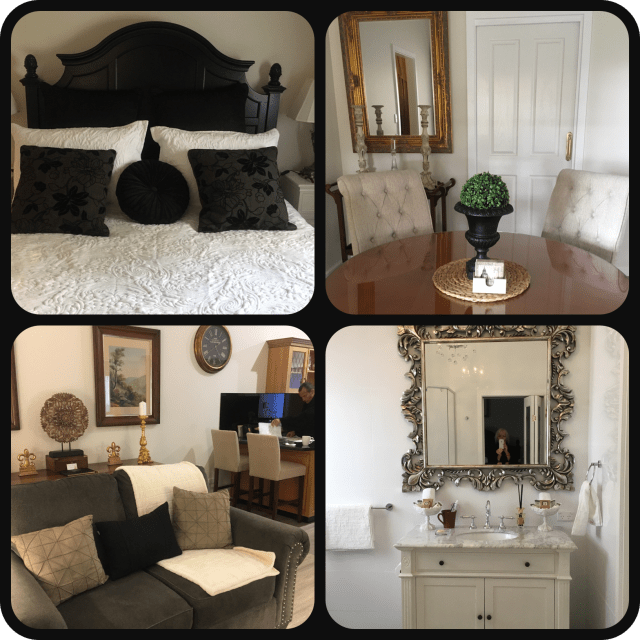
• The luxurious AirBnB where we stayed on the outskirts of Nairne was simply stunning. Decorated in ornate and sumptuous style with a generous supply of gourmet food, we were sorely tempted to stay in for three days and just pretend we’d visited the Adelaide Hills. We even tried to book an extra two nights when we arrived but were thwarted by some other selfish holidaymakers who had obviously read the reviews.
• Hahndorf, the original German settlement in this region. It’s marinated in Teutonic history and it’s very touristy but lots of fun. The Main Street is like set for a 19th Century German period drama (apart from the abundance of modern signage). The oldest, traditional German Inn serves a range of very good, locally made German beer, a welcome respite from the millions of litres of red wine that flood the whole region.
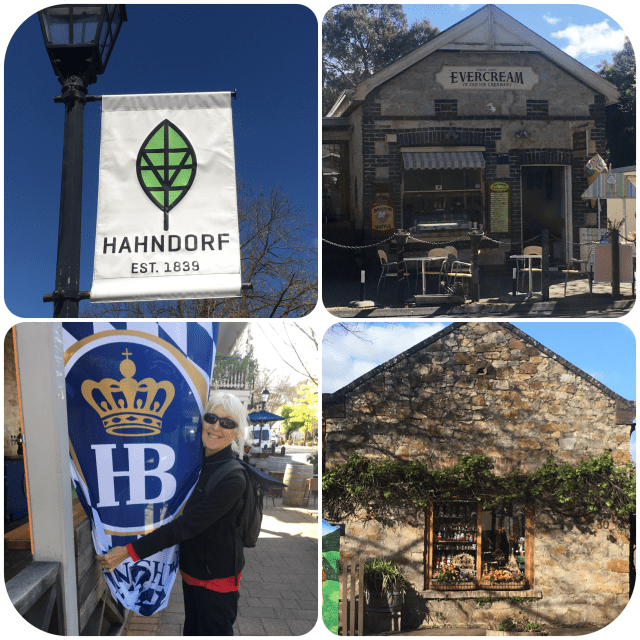
• Nairne, one of many stunning farmland villages set amongst rolling farmland fields reminiscent of the English countryside.
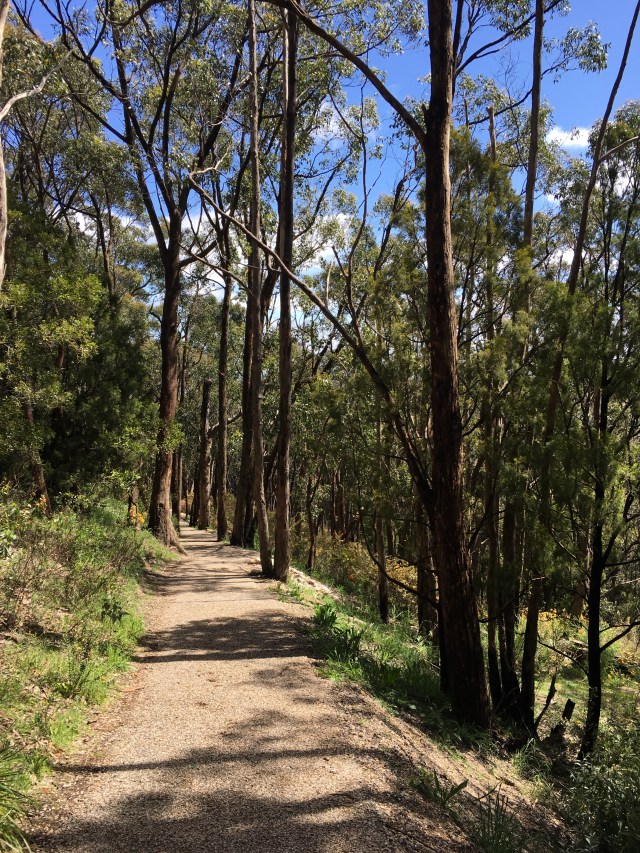
• Mt Lofty Summit, the highest peak in the region at 750m asl with views to Adelaide and the ocean. The Mt Lofty Botanic Gardens set in wild steep hilly bush land showcase beautiful European plants, all in full Spring glory on the day we visited. It’s the only place outside of Britain where we’ve seen fields of bluebells.
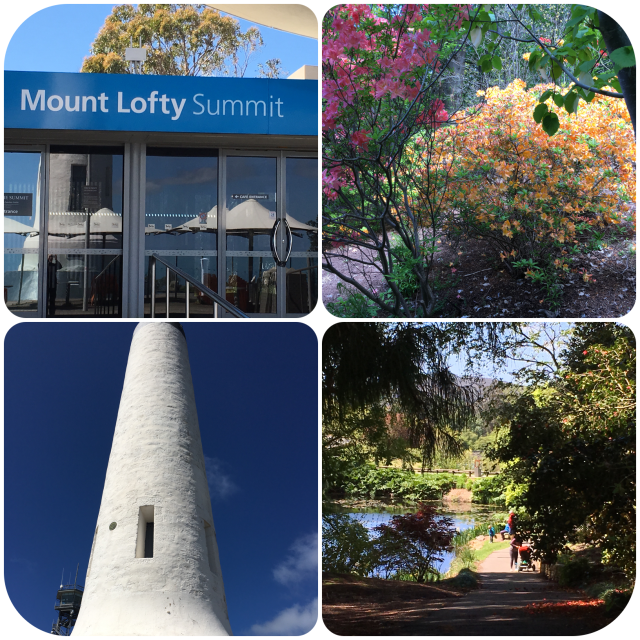
• Mt Barker Summit with 360 degree views of the surrounding Adelaide Hills to Mt Lofty and beyond.
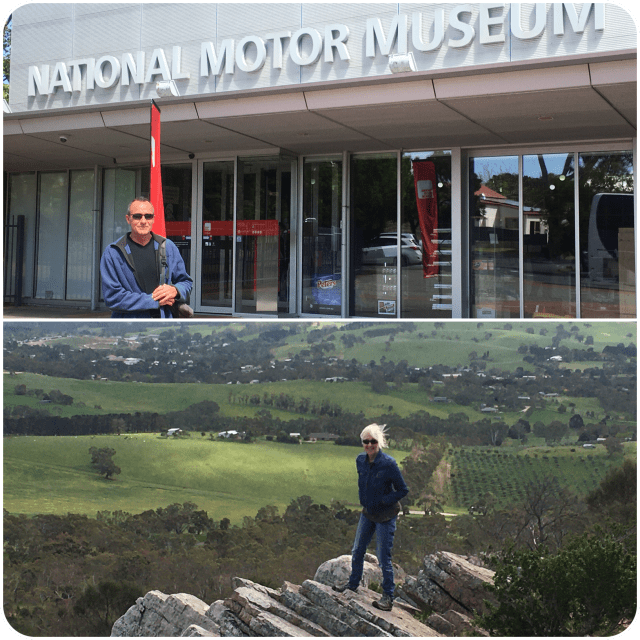
• National Motor Museum, Birdwood – what a hidden treasure! We spent a good part of a day here. Apart from an impressive collection of cars across the ages, there’s informative social histories and displays showcasing the background to, for instance, the Aussie Ute, drive-in theatres, early mail runs though the centre as well as lesser known Australian innovations (fibreglass cars from the 1960s?). There’s enough here to keep even the non-motoring enthusiast, eg Sue, entertained.
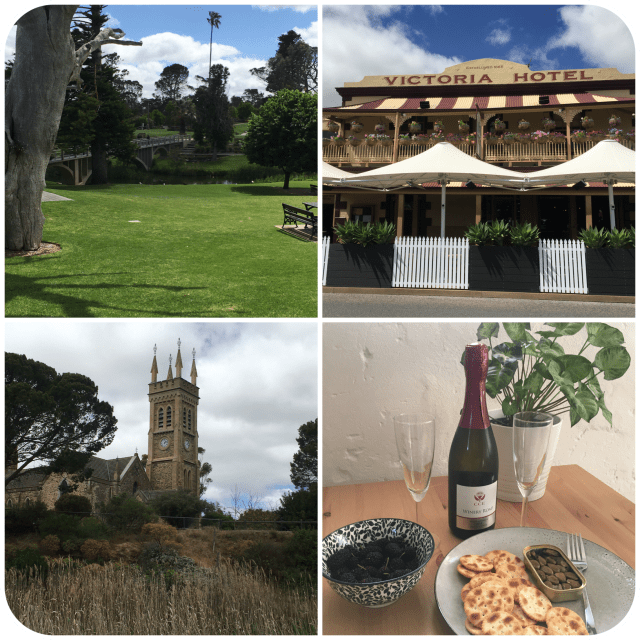
Heading South from the Adelaide Hills we stopped briefly at Strathalbyn, a small town that appears to be the antiques capital of Australia. We wandered through several labyrinthine shops and emporiums, with one particular establishment (Strathalbyn Antique Bazaar) being the biggest antique store we’ve ever seen outside of Alfie’s Markets in London. Away from the town’s Main Street we wandered through manicured gardens on a scenic town walk showing off some impressive stone churches.
Southern Fluerieu Peninsula
Having already driven to the South-Western tip of the Peninsula to catch our ferry across to Kangaroo Island, we decided to explore the South-Eastern side
• Currency Creek, a small farming/winemaking area en route to the south coast. We stayed for three nights in an old converted stone barn on a family property. Beautifully furnished and very comfortable with original graffiti, some dating back to the 1920s, left on display on the interior whitewashed walls.
• Goolwa, an arty little seaside town and an old trading port.
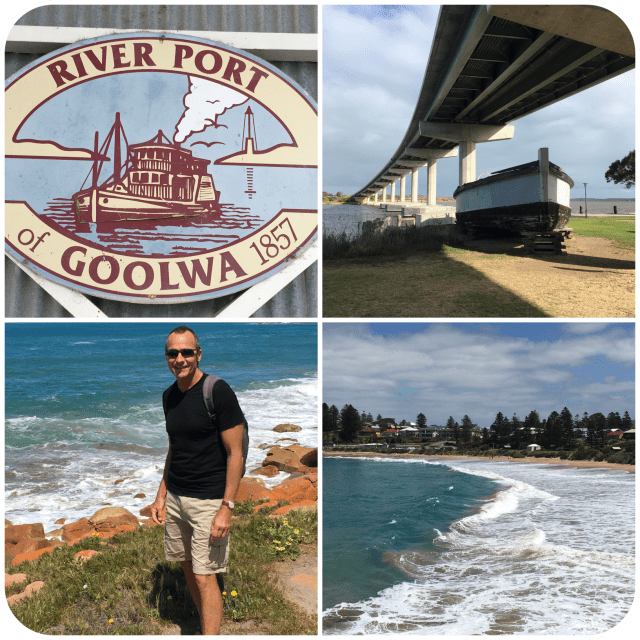
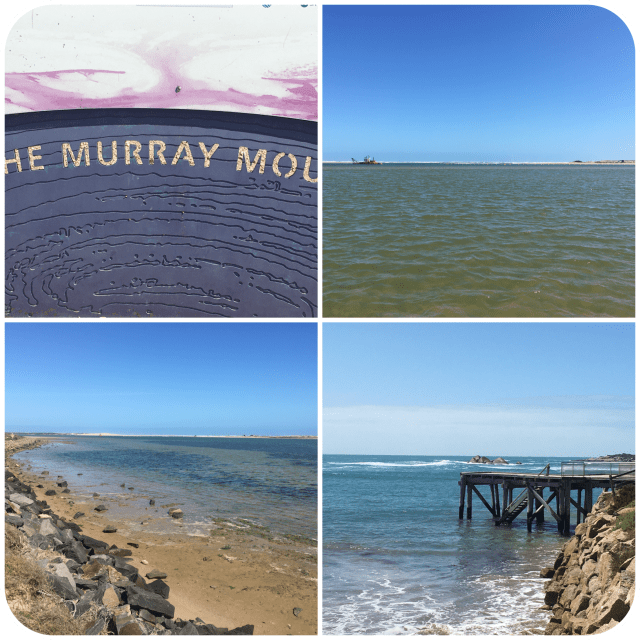
• Hindmarsh Island, accessed by road bridge from Goolwa. A desolate, flat and uninspiring place that reminded us a little of the Norfolk Broads. Murray Mouth, at the end of the island is where Australia’s longest river empties into the ocean in a huge flat sandy estuary.
• Port Elliot, a beautiful seaside town with a rugged rocky coastline and sheltered sand-beached bays. We walked for miles around the lovely headland, on boardwalks, paths and, at times, clambering over rocks lining the shore.
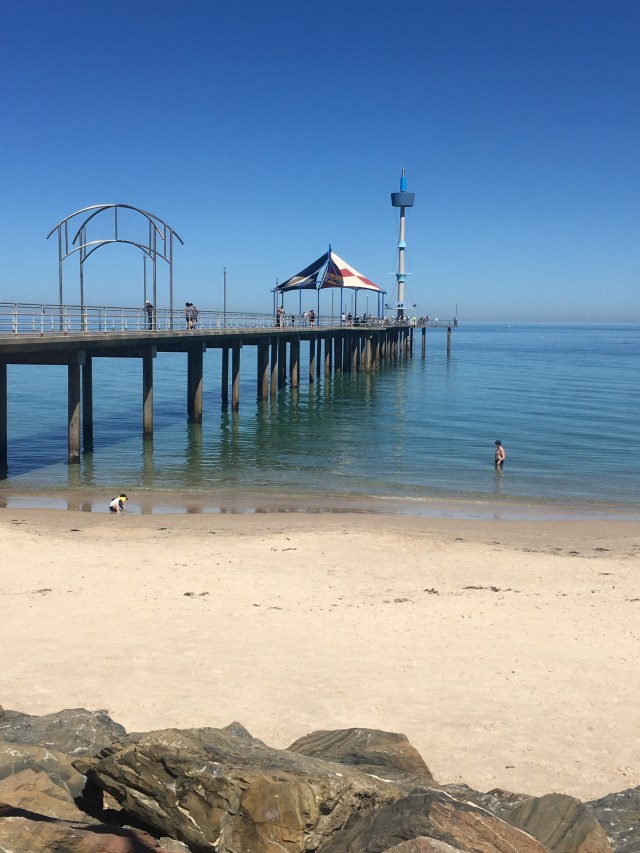
We returned our hire car, with 1,795km more on the clock than when we’d collected it, and ended our SA trip with a three-day seaside holiday at Glenelg, Adelaide’s premier ocean-front suburb. Some of the original grand old stone mansions still stand along the now heavily developed beachfront, reminders of an opulent and privileged history. The weather had continued to improve and warm up over the two weeks we’d been in SA, culminating in a couple of days of perfect beach weather. From our little bolthole in the suburbs, a recently renovated mid-Century flat on a tree-lined street five minutes off the beach by foot, we walked the promenade from Brighton Beach to North Glenelg, swam in the Southern Ocean and basically lazed around on the beach.
The relaxed, laid-back feel of the South Australia we had seen pervaded our last few days, giving us time to reflect. The Piggies’ 60th celebrations had been very special and offered us a memorable introduction to Adelaide’s wine-making culture. Kangaroo Island with Tom & Liz had given us a taste for the wilderness areas, almost on Adelaide’s doorstep. Our two-weeks worth of exploring this tiny corner of Australia had opened our eyes to the stunning scenery, intriguing history and outstanding wine making traditions of the area. South Australia seems to preserve and promote its heritage proudly and effectively, ensuring that visitors like us get a real feel for this highly accessible and delightful area. We returned to Perth refreshed, relaxed, enlightened and ready to tackle whatever adventures our peripatetic retirement lifestyle presents us with next. 
 Clapmacks Foray into Retirement