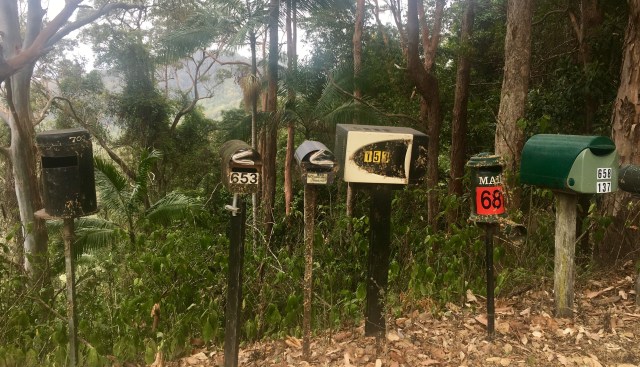
Bidding bye bye to Byron Bay we set a course north back over the border into Queensland once again, bound for the high country and the Lamington National Park. No visit to Queensland is complete without visiting a rainforest and we had something pretty special arranged.

Entering the National Park from the tiny settlement of Canungra we carefully navigated the narrow, steep, winding road up the mountain and into the rainforest, arriving 40 minutes and just 25km later at the famous O’Reilly’s Rainforest Retreat. This was our home for three nights – a haven in which to relax in the unspoilt semi-tropical rainforest environment and enjoy all the natural beauty on offer in this wonderful National Park.
The story behind O’Reilly’s is interesting and quite inspiring. In 1911 five O’Reilly brothers and three cousins left NSW and travelled north to the mountainous land west of what is now the Gold Coast. The Queensland Government had released parcels of land for sale to be used for establishing primary farming production. They purchased 800 acres, cleared a chunk of it by hand and set up a dairy farm – on the side of a mountain almost 1,000m above sea level. Crazy! But it worked and they were soon producing milk. Unfortunately, by the time they carted it by horse-back down the mountain without any refrigeration, most of it had spoiled.
Meanwhile, the QLD Government recognised the outstanding natural beauty of the area and, in 1915, declared a huge mass of it the Lamington National Park. Suddenly people began flocking to the previously unknown region to see it. O’Reilly’s farm was the only habitat for many miles around and folk began knocking on their door seeking food and shelter. With the sale of curdled milk barely managing to sustain them, the clever O’Reilly boys had a brainwave and hit on the idea of setting up a tourist retreat offering lodgings and guided tours of the area. It took some time to establish, but in 1926 O’Reilly’s was officially opened. Ninety-three years later the retreat is still a family owned business. It has been owned and managed by the O’Reilly family continuously since opening and a fourth generation O’Reilly is now working in the business. It’s a great success story and a fascinating piece of local history.
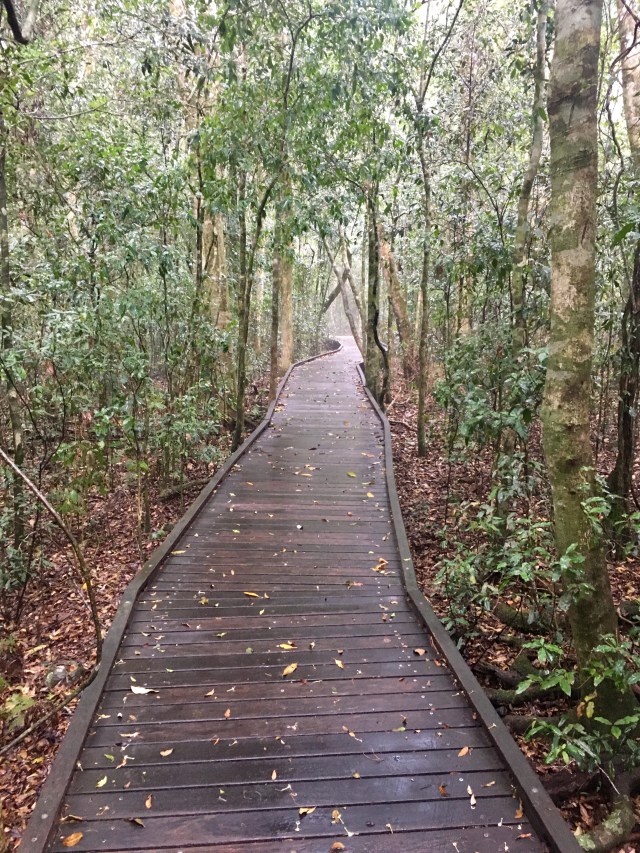
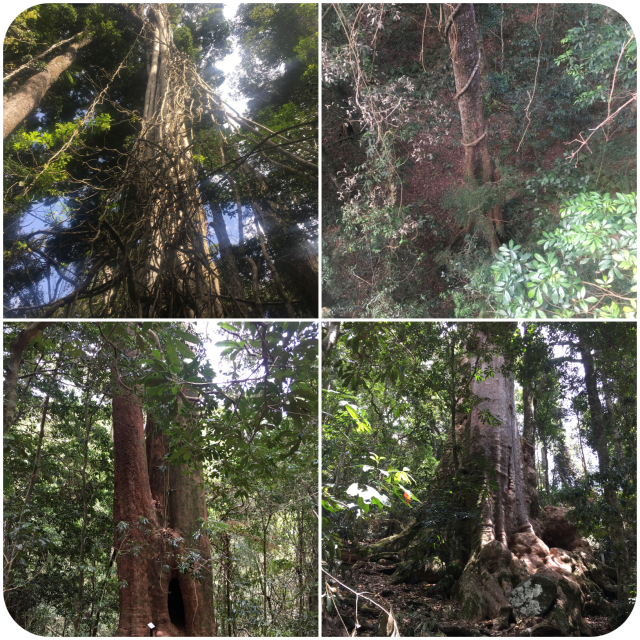
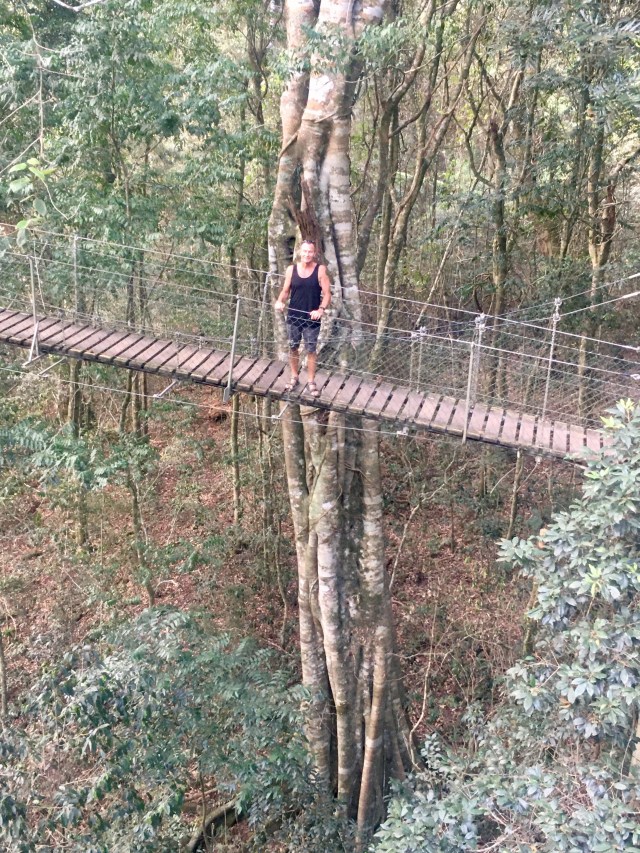
From the luxury of our room, with a balcony overlooking forest and hills where colourful parrots visited daily for a feed, we explored by taking several of the multiple walking trails, some guided and some unassisted. What a revelation! The trees in the forest are majestic, booyongs, giant figs, Arctic pines, box brush, hoop pines, fern trees and Piccabeen palms, among others, soaring high overhead. Some of the box brush trees have massive girths and are over 1500 years old (making them possibly the oldest trees on the planet). Thick tendon-like roots, long swinging tendrils of pepper vines and a sprinkling of pale green moss gives the forest a somewhat pre-historic feel.
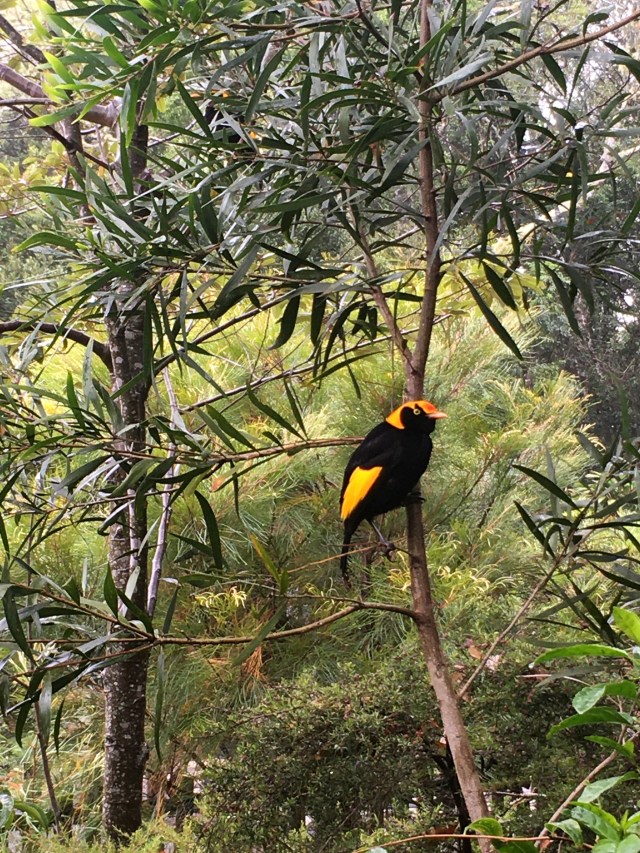
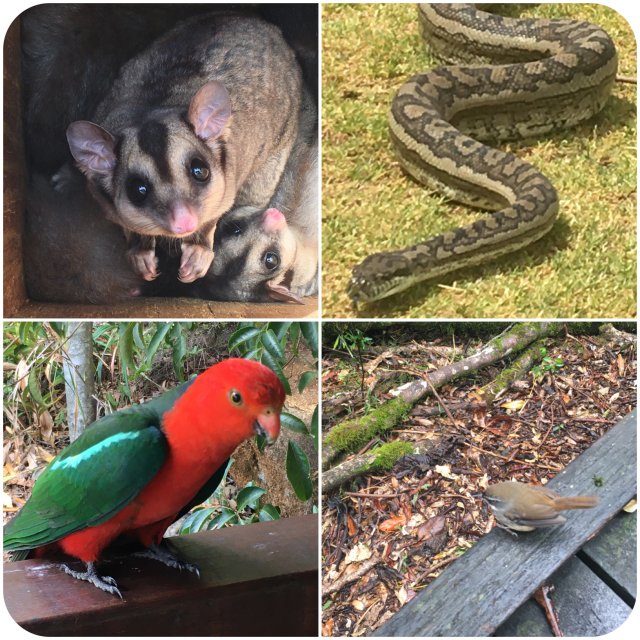
The birdlife is vibrant, loud and abundant. We saw beautiful bower birds, robins, wrens, whip birds, fan tails and a host of brightly coloured parrots. Lizards and an occasional hopping marsupial graced the pathways and bush on either side of the trails and in a pool under a waterfall, where we stopped for a cooling dip, a bright blue freshwater crayfish emerged from under a rock to show off in the shallows.
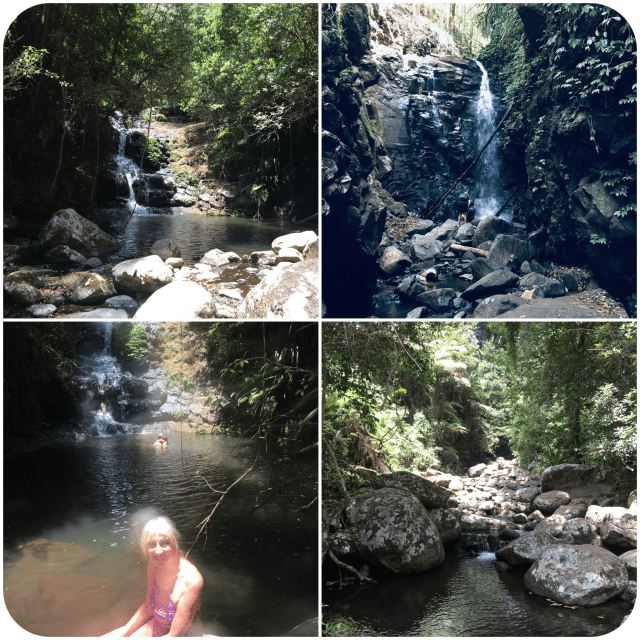
The trails led us down the mountain through thick forest into creek beds with water tumbling over the basalt rock (and where we felt for all the world as if we were in a Steve Parrish photo) then up to the clifftop ridge line and into stands of eucalyptus and grass trees with panoramic views to the valley floor 300m below and way off into the distance. It was all simply breathtaking.
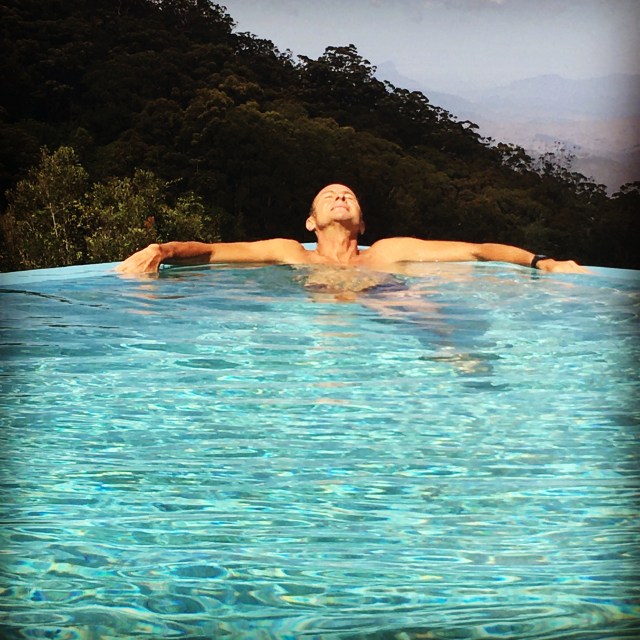
During our stay the fire situation in the area remained serious and although the closest fire had been an hour away, smoke haze continued to reduced visibility, so that views weren’t as clear as usual. The local fires were contained but the drought conditions, evident on our drive in across the dry parched planes below the national park, winds and heat were causing havoc generally. It was, therefore, with some relief that 20mm of rain fell on our second night at O’Reilly’s. The ground sucked in every drop that reached it and the forest greenery sparkled and twinkled its gratitude in the morning light.
The changing weather patterns and the risk this presents to Lamington National Park really highlighted to us just how fragile these ancient, magnificent and seemingly timeless rainforests actually are. Perhaps we are amongst the lucky ones who, over the past 93 years, have been afforded the privilege of experiencing their grandeur. Who knows how long these delicate environments can survive unless we take the necessary steps to seriously look after our planet?
 Clapmacks Foray into Retirement